Category: podcast

EP 379 Religious Nationalists Have a Growing Influence on American Politics
EP 379 Religious Nationalists Have a Growing Influence on American Politics

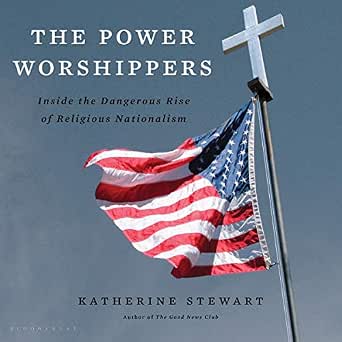
While the number of religious nationalists may not be overwhelming their influence on American politics, and access to those in the White House, is a stunning political achievement. Some may envision evangelicals as fighting a culture war against modernity, but the movement described in Katherine Stewart’s book, ‘The Power Worshippers’, is so much more than that. Ignoring their aims, strategies and growing influence on the politics of our nation will inur to the detriment of those who understand the Constitution to be built on democratic values and not religious ones. They had, and still exercise, great influence on the Trump Administration and are focused on reconstituting the federal courts in such a way that will magnify their impact for decades to come. The Christian right employs a network of think tanks, advocacy groups, pastoral organizations and the fortunes of some very wealthy individuals in our society to re-imagine the principles upon which the Republic was first built. They are sophisticated and mobilized and barely towing the line separating church from state. It’s an important story that we describe on this podcast.

EP 378 Whistleblower Portrays Serious U.S. Military Failures and Dishonesty

EP 378 Whistleblower Portrays Serious U.S. Military Failures and Dishonesty

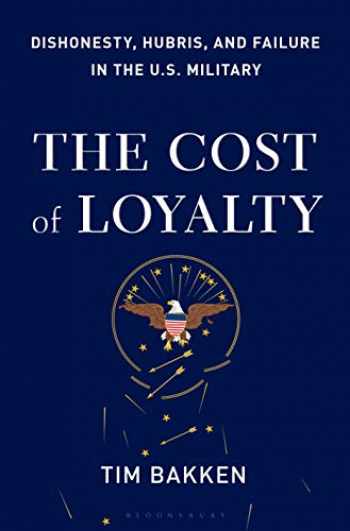
It’s tough to accept hard truths, but it’s also deadly and bewildering to continue to accept that the most well financed military in the history of the world has not had a true victory, while being involved in many conflicts, in the last 75 years. Why is this? Where do we begin? The quality of the students and the teaching, for example, at West Point is not what is packaged to the American public and sold as world class. Thus, the leadership corps we have trained hasn’t yielded great generals since WWII. Just as we have seen how America’s political system had a difficult time demonstrating the supposed strengths available through our medical system during a pandemic, spending more on sophisticated weapons systems and generally unaudited trillions in defense expenditures has yielded poor results in conflicts from Korea to Afghanistan. You have to wonder if there were a major conflict whether our military would be exposed as a paper tiger. When we choose to fight, civilian and military leaders pick civil wars and counterinsurgency for which we are little prepared. In the process, we have hardened the resolve of our enemy combatants, made other adversaries stronger in the wake of our warmaking or created unintended consequences with profoundly negative effects. Tim Bakken who teaches civilian law at West Point lays out a case that not only is the military separate from the rest of society, but it has been granted extra Constitutional rights which were never intended by the framers. He explains in this podcast how he won a case against his treatment, as a civilian teacher, and why he’s still on the job today. And then he provides an unflinching critique of our military from his book, ‘The Cost of Loyalty’.

EP 377 Vladimir Putin: Playing a Bad Hand Really Well on the World Stage

EP 377 Vladimir Putin: Playing a Bad Hand Really Well on the World Stage

https://static01.nyt.com/images/2020/07/21/books/20BOOKBELTON1/20BOOKBELTON1-facebookJumbo.png
https://www.amazon.com/Untitled-Camilla-Bartlett/dp/0374238715

There are so many unknowns when it comes to Russia and its relations with the United States.  Quick quiz: friend or foe? Democracy or dictatorship?  Who can tell from the glowing words that President Trump has spoken about Vladimir Putin.  He appreciates his strong leadership, while others equate his rule to a strongman approach to governing.  Two things are clearer every year–he controls all mechanisms of government in Russia and has a group of cronies with whom he is pillaging the wealth of the nation by setting up straw organizations and middlemen to move those resources around the world in very complex ways.  It’s also coming more into focus that he has a big chip on his shoulder about the West’s treatment of Russia and the eastward movement of NATO to his doorstep.  To counter that he has used Russian monies to poke a sharp stick at the West through election interference, as seen in the United States in 2016, and other means of influence peddling. While there’s much self aggrandizement in his rule, he also does want to restore Russia to a more prominent, and meddlesome, place on the world stage.  Catherine Belton, author of ‘Putin’s People’, breaks down his machinations in great detail and explores his regime’s goals.  And we also peel back President Trump’s relationship with Russia in this podcast.

EP 376 The Much Misunderstood Purpose of the Second Amendment

EP 376 The Much Misunderstood Purpose of the Second Amendment

In many ways, gun adherents and those who seek to control their use in America have something in common. They misinterpret the true initial intent of the Second Amendment. Most commonly we hear that it was adopted as way to insure that Americans could protect their homes or to allow them to hunt or join some organized militia to keep the federal government from gaining too much control. Historian Roxanne Dunar-Ortiz sets the record straight in her book, ‘Loaded: A Disarming History of the Second Amendment’. The Second Amendment does confer the right to own arms to individuals but the purpose at the time was to settle new territories and drive Native Americans from their lands. Further, with the development of slave patrols, firearms were necessary to maintain title to those in bondage as part of America’s ‘original sin’. Once we understand the true origins then we can go on to debate their necessity and proper regulation in this modern era. The issues of gun violence, such as mass shootings, may be a starting point for our present day conversations on the subject, but we owe it to ourselves to set the record straight about the role of firearms in issues of social inequality and ongoing treatment of minority populations in our culture. The gun is as American as apple pie, but we owe it to ourselves and our future to understand why.

EP 375 California on Fire

EP 375 California on Fire

Fifty-two large fires are now burning 748,987 acres in the western United States, with many proving to be very difficult to contain.  The number that have burned by this time of year is the largest in a decade, with 33,000 fires searing over 1.9 million acres by July 12.    

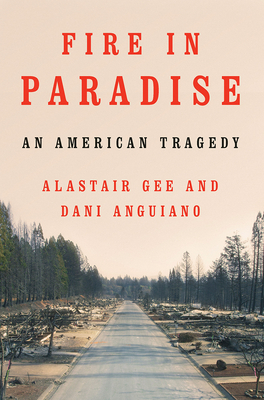
In California, fire is as natural and necessary as the rain and wind. Yet how humans manage to co-exist with flora and fauna determines whether natural cycles and events are manageable or rage out of control. Of late, we see, like the fires, the types of hurricanes and floods, more intense and more regular that remind us something is out of balance. Are we listening? One such event that drew our attention was the total destruction of Paradise, California in November, 2018. It burned the town of Paradise, home to 27,000, to the ground. And it was a harbinger of fires to come. Calling it the ‘new normal’ is oddly hopeful. Coming events could well surpass this unspeakable level of danger, which claimed 85 lives and came to be the deadliest ever wildfire in the state. There was once seasonal blazes, as are necessary to maintain various plant species. Today the growing legion of firefighters in California wonder if there is a ‘fire season’. There are many factors contributing to the raging flames in the area and they have parallels with other natural disasters we are experiencing. As man tries to dominate the planet for our growing population, painfully we’re beginning to recognize the limits to the control we can exert. The natural world, in this case, and many others seems to be biting back. To understand the complex factors involved in the form of a fire disaster, we turn to Alastair Gee and Dani Anguiano, co-authors of ‘Fire in Paradise: An American Tragedy

EP 374 Marriage American Style in the Wake of the Pandemic

EP 374 Marriage American Style in the Wake of the Pandemic

In 2018, marriage rates in America began falling to their lowest rates since the government kept those statistics dating back to 1867. And, yet, divorce rates, too, have been dropping for the better part of a decade. So what are we to make of these trends? Perhaps, the unions that are forming are fewer in number, but stronger. And in the wake of the pandemic, after being together 24/7, what do you expect to see? Brad Wilcox, director of the National Marriage Project at the University of Virginia and a senior fellow of the Institute for Family Studies, weighs in a range of topics relating to marriage in America and feels that the ‘soul mate model’ of marriage may not fare as well as a more ‘family-first model’ when all is said and done at this unusual moment in time. We tackle the issues relating to later marrieds, second marriage success, the lengths of marriages as we age up together and many other interesting questions about ’til death do us part’. You may want to listen to this one alone. Not really.

EP 373 The Future is Asian

EP 373 The Future is Asian

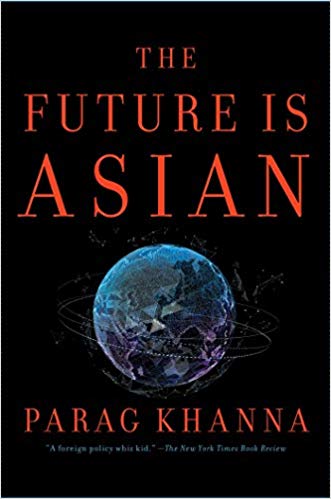
The 20th Century was the American Century. However, there are many signs that the world in this period is moving away from our influence and gravitating to the diverse, technocratically advanced countries of Asia. Much of this started with Japan and its re-birth after WWII and China’s modernization after Mao. However, given the the much studied governance of Singapore, the growing sophistication of India and the substantial Belt and Road Initiative of China, the eyes of the world are looking anew at what this region has to offer. According to Parag Khanna, author of ‘The Future is Asian’ that doesn’t portend a total eclipse of American influence, but a more balanced world with strengths and competition in more places, including Asia. The model that is developing in the region, including its economics and governance, represents a uniquely Asian approach, not a Western one. One in which free markets have given way to state-managed capitalism, family enterprise and investment-led growth. His insights are clear, direct and provocative. You will want to hear them.

EP 372 America: A Debtor Nation

EP 372 America: A Debtor Nation

James Madison, the architect of the written Constitution, said that our nation’s founders developed limits on debt that would be ‘clearly visible to the eye of the ordinary politician’. That was then and this is now. While we lived by that well-defined principle for the first 200 years of existence, America has begun to pile up debt at an astounding rate, since 2001. And if we didn’t enter the coronavirus moment with substantial enough debt as a nation, some say this period and the ensuing infusion of cash from the Treasury and The Federal Reserve to avoid immediate calamity has heaped on trillions more making it a tipping point. So, do you care? Does it really make any difference what our debt to GDP level is? By many measures, people still want to buy our debt, interest rates and inflation haven’t risen and the dollar is still strong. After all, we’re the reserve currency of the world. But is it time for America to stop digging a larger debt hole and get to the business of living within our means or taxing more for the services we enjoy? To discuss the issue at hand is Bill White, author of ‘America’s Fiscal Constitution’ and former mayor of Houston, Texas and Deputy Secretary of Energy in the federal government. As reports keep reminding us, Medicare and Social Security will need to be replenished sooner than later. Political leaders in Washington have to act. They may need to hear from you as to what you want to do. This episode will give you the background you need to understand the context and depth of the problem.

EP 371 Downtowns and Public Spaces: What Works in Revitalizing Them?

EP 371 Downtowns and Public Spaces: What Works in Revitalizing Them?

Many of us can remember when downtown was the bustling hub of activity in our communities. As the song of the same name suggested ‘you could forget all your troubles, forget all your cares’. However, as highways cut through central business districts and people began to use their cars to shops at malls on the periphery of the city, the many great buildings and interesting spaces in downtowns began to fall away. In many places, for over 30 years or more, plans and visions have been put forward to revitalize these city centers. Some of succeeded; while many have failed. So what are the right ingredients to create this comeback? Andrew Manshel, author of ‘Learning From Bryant Park: Revitalizing Cities, Towns and Public Spaces’ share with us his firsthand knowledge on how it’s done. For a decade, he served as associate director and counsel to the Bryant Park Restoration Program in the heart of Manhattan. What he has to say about ideas that work transcends the unique geography of New York City and can be applied around the country, in places large and small. It’s often less about the design of a space, as opposed to the programming of it to meet our greatest needs–human contact and the pleasure of food. We talk about projects around the country focusing on ideas you can use in your own community to make that important place in your city’s center once again the place to be.

EP 370 Video Streaming Services Multiply as Business Booms

EP 370 Video Streaming Services Multiply as Business Booms

Have you been binge watching like so many in our society in this stay at home moment? Do you have a favorite service or did you sign up for free trials? And do you churn, by that we mean stay with a service for several months, drop it and return when there’s something that catches your eye? If there’s been a growth industry in America before, during and, likely, after the coronavirus pandemic it is streaming video content. With so many major players stepping up to challenge Netflix the industry leader, like Disney, Comcast, Apple, Amazon and Quibbi, the competition for eyeballs and subscriptions is sure to intensify. What is the value proposition each of them offers and how will this all shake out in the period ahead? To explain what’s happening Dan Rayburn, streaming media expert and principal analyst at Frost & Sullivan, joins us. He looks at the big picture trend and delves into the various business models each service is employing. It’s a great conversation and will give you a clear picture of the rapidly expanding market for your attention.