EP 681 A Health Care System That Pleases No One
 Have you talked to anyone lately who thinks that the system of health care we have now is working just fine? I didn’t think so. You may have coverage but your co-pays and deductibles are going up and up. You may be eligible for government help but you didn’t know you were and, therefore, didn’t sign up. Or you made it to a stage of life when you’re eligible for Medicare but you didn’t realize all the choices you have to make about your coverage and the fact that the average Medicare recipient is still paying $5,000 a year for services. And on top of all this you are imprisoned in a job because your employer provides your health care and going out on your own, even with the Affordable Care Act in effect, might not provide you with the same coverage. In total, our system is a mess and unlike anything in the rest of the industrialized world. This system of coverage and delivery does not need a new coat of paint. It needs to be re-built in full, according to Liran Einav and today’s guest, Amy Finkelstein, who co-authored the book, “We’ve Got You Covered: Rebooting American Health Care.” It will happen, but like all things political in America not without much time and energy and enough people finally coming together to say enough is enough. Change it. What with? Find out today on this podcast.
Podcast: Play in new window | Download
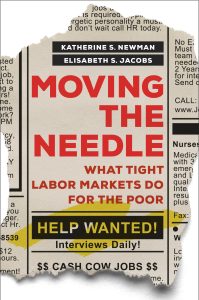 There are things that still seem unimaginable even in the political chaos of our times as women’s rights are being stripped away and historical content taught in schools is being tightened so as not to ‘offend’ students. One of those to my mind is the push in a number of states to ease restrictions on child labor. It’s hard to imagine that we want to revisit the images seared in our minds by Upton Sinclair in his novel “The Jungle” which exposed the appalling and unsanitary conditions in the meat-packing industry at the turn of the 20th century and place young people in that circumstance again. Mind you there are stories of the two 10-year old children found to have worked unpaid shifts at a Kentucky McDonald’s and unaccompanied migrant children cleaning up remains at a meat packing plant in the US, as well as an increase in federal child law violations, but what we discuss more directly in this podcast is the growing movement in state legislatures to ease restrictions on child labor because of worker shortages. Backed by business groups, this push is to lift limits on hours worked, types of work performed and the ages of those involved in states like Arkansas, Tennessee and Minnesota, among others. It’s a trend that must be monitored to ensure that we do not backslide to a place we have not been in this country for more than a century. Elisabeth Jacobs, a Senior Fellow at the Urban Institute and co-author of “Moving the Needle: What Tight Labor Markets Do for the Poor”, joins us to discuss.
 The answer to our title for this podcast episode is no, but…many fewer people identify as Christians today than in the late 20th century and whether it be frustration with scandals in the Catholic Church, the politicizing of many Protestant sects or the pandemic, the pews just are not as full as in the past. As most things are there is nuance and complexity to this story. For example, mainstream Protestantism is falling on hard lines while some evangelical churches are thriving in different regions of the country. And many new arrivals from Central America are bringing new parishioners and vibrancy to the Catholic Church and Protestant evangelical groups in some regions of the country, but there is also great opposition to immigrants by many white Protestants. Joseph Slaughter a historian and assistant professor of religion at Wesleyan University in Connecticut, attempts to walk us through the complexity of the marketplace of religion in our country. He reminds us that formal religion has been viewed as in death throes before and rebounded. Can it in an era when a growing number of young people come from families of mixed faiths who have not really been born into a singular faith tradition? We’ll discuss it all on this podcast.
 If there was ever a political leader who understood the moment, American history would point to FDR. Having been elected with America on its economic back from the Great Depression, he was masterful in instilling confidence in the people about their futures and in developing new government programs which, he said, would have been successful in his mind if 60 percent of them worked. Not only did many of them work, but it his notion of a more active federal government with which we live today. And while attempts have been made to curtail some activities, it is hard to see how his trajectory is not still our guide. At the same time as he was trying to modernize and innovate in domestic policy, he was also forced to spur a recalcitrant American public in preparing to assist and join the war developing in Europe. It was the merge of the two-domestic and foreign-which is the focus of Craig Nelson’s new book, “V is for Victory: Franklin Roosevelt’s American Revolution and the Triumph of World War II.” He needed America up and running if he was going to re-build our mothballed armed forces after World War I and make us the world’s most formidable economic and military force ever since that time. Given that his legacy is still so predominant in our political culture we wanted to revisit how the nation we are today really came about.
 Exercise fads are big in America. We love the novelty of hot yoga one minute and Zumba the next. The whole industry has evolved so much over the last 70 years when presidents Eisenhower and Kennedy made physical fitness a spoken priority. In truth, however, only 20 percent of Americans exercise regularly and America seems to the naked eye to be overwhelmed with the issue of obesity in both children and adults. So how is it that each New Year more people resolve to get in shape but so few do? In some sense the pressures of everyday life get in the way for many people just trying to keep basic family responsibilities together with little time for anything else; while others have no access to gyms, good recreational areas or even enough room in their homes in which to put a treadmill. It’s a fascinating history as to how we got here and it is brilliantly documented in “Fit Nation: The Gains and Pains of America’s Exercise Obsession” by our guest, Natalia Mehlman Petrzela. I share my workout history. That alone is a reason to listen in. It may surprise you.
 It still has many of us shaking our heads in disbelief that the most sophisticated nation on earth, in so many ways, proved so unprepared, disorganized and unsuccessful at confronting the Covid-19 pandemic. Yes, Operation Warp Speed and the development of Mrna vaccine was a great achievement, as the government incentivized the private sector to quicken the pace of the project. However so many other aspects of the response were abysmal. Worst of all the U.S. death rate in the first two years of the outbreak was the equivalent of an estimated half-a-million Americans more dying when compared to European nations. On top of it all as the pandemic’s worst ravages have subsided, there has been no national commission established to determine what went wrong and how to prepare for the next public health emergency which is sure to come. So, a group of thought leaders, led by the co-chair of the 9-11 Commission, Philip Zelikow, gathered 35 others to develop a report and the resulting book, “Lessons From the Covid War: An Investigative Report” is the basis for this podcast. Economist and law professor at the University of Chicago, Anup Malani, one of those individuals involved, joins us to discuss.
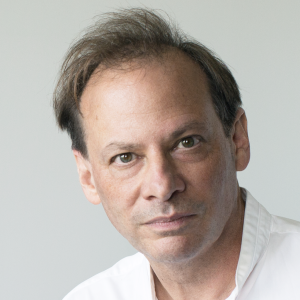 Despite many in our midst downplaying the role of experts in our society, the truth is that we thrive because people have mastered so many different skills and abilities. We do what we enjoy or do best and we outsource those things we do not want to attempt to them with full confidence that they will know how. Masters of one sort or another are all around us. It could be baking, boxing, the art of magic or drawing or a range of other pursuits that they have spent the time perfecting and bit by bit become highly proficient in doing. The preceding list was among the things our guest, master essayist Adam Gopnik tried himself and catalogued in his new book, “The Real Work: On the Mystery of Mastery.” He tells us early on that this is not a how-to book as much as it is a how to appreciate volume on what it means to have a mastered a new skill, what’s required and why there is such value in the process itself for the interior satisfaction it provides. Gopnik is a brilliant writer(and that’s surely a skill), but as an art critic for The New Yorker he leaves the observation deck and pursues mastery for himself, sharing many brilliant insights with us on this podcast.
 In March 2020, economic and social life across America ground to an abrupt halt as the country attempted to slow the spread of COVID-19. In the worst economic contraction since the Great Depression, twenty-two million people lost their jobs in the first few months of 2020. And yet somehow the finances of most Americans improved during the pandemic–savings went up, debt went down, and fewer people had trouble paying their bills. A combination of factors resulted in this unanticipated economic circumstance, including fast and effective government intervention(the Cares Act), more generous unemployment benefits, changes in lifestyle and spending habits and rent and college loan abatement for an extended period. It dispelled the notion that at least on some fronts, America was incapable of responding to a crisis in a bipartisan and impactful way. (The health response certainly leaves open this question in that sphere.) In the new book, “The Pandemic Paradox: How the Covid Crisis Made Americans More Financially Secure”, economist Scott Fulford shares the empirical evidence of this counter-intuitive story and what we find as our economic reality in the wake of the pandemic.
 The January 6, 2021 insurrection at the U.S. Capitol was at once an end-the culmination of long-simmering strain of violent American extremism–and a beginning. In effect, it’s the origins of a new war on democracy by a fundamentally antidemocratic far-right movement that, cynically and ironically, calls itself a ‘”Patriot” movement. They are anything but, according to our guest David Niewert an award-winning investigative journalist who has made right wing extremism his beat for over forty years. In his new book, “The Age of Insurrection: The Radical Right’s Assault on American Democracy” he details chapter and verse the forces at play in America that explain an anger and turbulence that has taken on many forms since the KKK in the early twentieth century and fueled by events like Ruby Ridge and Waco in another incarnation. Yet it wasn’t until a sitting President, Donald Trump, gave legitimacy to conspiracy theories and these theorists that the movement took on a new, and more dangerous, dimension. Adding to the mix are what he calls “conflict entrepreneurs,” like Alex Jones and Steve Bannon, fueled by social media, cooking up a more lethal toxic brew that cannot be ignored in 2023
 Mankind has been fascinated by this question since we began conjuring up big thoughts about things around us and things unseen, but imagined. Today the search for the answer to that question seems to have intensified beyond ‘War of the Worlds’ broadcasts and classic Star Trek episodes. The government has developed new agencies to legitimize the search and future explorations to the far side of the moon and Mars. This effort is complemented by the most powerful technology to detect and will be deployed in search of…what exactly? Our guest, Jaime Green, an acclaimed science journalist and author of “The Possibility of Life: Science, Imagination, and Our Quest for Kinship in the Cosmos,” says are quest reflects our values, our fears and, most importantly, our enduring sense of hope. As the search for Extra Terrestrial Intelligence gets turned up a notch, she reminds us that pondering its existence is less important than answering the question “what if.” Intrigued? Listen in.