EP 865 DOGE Efforts May Not Survive Court Scrutiny
 Employment attorneys like to get together at conferences and routinely discuss ‘best practices’ so that they can help employers comply with legal requirements, reduce the risk of lawsuits and promote positive work environments. Well now, thanks to Donald Trump, Elon Musk and DOGE they have something new to discuss–‘worst practices.’ According to our guest, Attorney Gary Phelan, a partner at Hurwitz, Sagarin Slossberg & Nuff in Connecticut, co-author of “Disability Discrimination in the Workplace”, their amateurish, capricious and downright illegal approach to layoffs in the federal government meets the new gold standard in that category of employment practices. So many lawsuits have been filed against the Trump Administration since January that the Justice Department has had a hard time keeping up with them. We discuss all that’s gone on with Attorney Phelan and home in on the new mega-lawsuit which represents the best shot at fully undoing all the DOGE efforts to date.
Podcast: Play in new window | Download
 As a window into the refugee crisis which has landed with particular impact on the European shores, journalist and author Jeanne Carstensen focuses her new book on a tragedy dating back to October 28, 2015. At the height of the biggest refugee crisis since WWII, a dangerously overloaded old wooden boat set sail from Turkey. The smugglers had promised the passengers ‘a very safe’ journey to the nearby Greek island of Lesvos, but soon the boat swayed from side to side, broke apart, tossing hundreds of men, women, and children into roiling seas, resulting in the largest loss of life in the crisis in the Aegean that year. Thus begins the compelling story that is the basis of her book, “A Greek Tragedy: One Day, A Deadly Shipwreck, and the Human Cost of the Refugee Crisis.” Our conversation delves into the refugee crisis from all angles and brings the story forward to this day as we continue to see so many people, a significant number from war-torn and climate ravaged parts of the Middle East, struggling to find new homes because of their displacement. Spoiler alert: it is not a particularly welcoming moment for refugees and America is playing a role in that.
 While many of us do not believe Donald Trump when he says the quiet part out loud, on the matter of deporting people (mostly undocumented, but not all) out of the United States during his second term, he was serious. However, his zeal to do it has ensnared more than folks who came here without papers or overstayed visas AND committed violent crimes. There are others who’ve simply spoken their minds or been lured under false pretenses to an immigration interview and had to have a judge intercede to keep them here. What’s going on with the use of the Alien Enemies Act of 1798, the threat of suspending the writ of habeas corpus and lock aways for who knows who in El Salvador’s notorious gulag defy explanation and run counter to law, according to numerous court setbacks for the Administration. And after the Supreme Court ordered that Kilmar Abrego Garcia’s release be ‘facilitated’ from his custody in an El Salvadoran prison, the Administration has still refused to do so. What is happening here? To break it all down for us, and provide history and context, is Julia Preston, a journalist and author with a ten-year stint as the immigration reporter for the New York Times. She was part of a team that won a Pulitzer Prize in 1998 for reporting on international affairs. She will challenge you, as she did me, on knowing the facts about what’s happening in this moment.
 DOGE, the Department of Government Efficiency in the Trump Administration, is getting a lot of headlines, but the news coming from it may not benefit long-term reforms that virtually all Americans agree are necessary in order to expedite more effective governing. That will require streamlining and enhancing individual responsibility and accountability by civil servants, instead of strict adherence to outdated rules. DOGE seems hellbent on taking an indiscriminate chainsaw to the government itself instead of pruning and cutting back in strategic ways and bringing more fluidity to the process. Philip K. Howard is the Chair of commongood.org and has been a leader on matters of government and legal reforms in America. He has been authoring books for years describing what needs to be done to enhance the performance of government and holding political leaders to account, rather than having them perform poorly because the system was designed to thwart individual initiative and accountability. He will give you a more cogent illustration of what needs to be done than anything you’ve heard from Donald Trump or Elon Musk.
 Nuclear power was once thought to provide unlimited energy at no cost. Then the costs became apparent–building and maintaining costly facilities, environmental degradation, abundant use of water resources, storage of radioactive waste and overall security and safety. After the Three Mile Island accident, it was thought that nuclear energy’s promise had come and gone. But, once again, there is buzz about the promise of nuclear energy. And that’s because the power generated is carbon free in the age of climate disruption. And we have growing needs for electricity, particularly due to the dramatic needs for it to power our EV’s and data centers for AI. So, Microsoft and Google, among others, are looking for creative, and cost-effective ways, to get old nuclear power plants back online, convert coal plants to nuclear, build the smaller reactors and, if necessary, site new large plants. There is a buzz about nuclear and by listening to this podcast you will have a better sense of the promise, and the peril involved. Our guest is Anna Erickson, Ph.D. She is a leader of Advanced Laboratory for Nuclear Nonproliferation and Safety and a Professor of Nuclear and Radiological Engineering at the Woodruff School of Mechanical Engineering at Georgia Tech.
 Even though America and the first Trump Administration rushed into production the most effective vaccine to fight the COVID pandemic as part of Project Warp Speed, our life saving efforts failed to deliver the desired results. There is no way to look at America’s response to the COVID pandemic without wondering what went wrong. America suffered 3,200 COVID deaths per million and a peak loss of 21.9 million jobs. No major industrialized nation had a worse record. It brought to the surface our many divisions including our partisan politics, distrust of our healthcare system, and our new addiction to disinformation. It’s not as if we didn’t have forewarning that one day something like this would happen. In 2005, then President George W. Bush warned that another major pandemic was inevitable. Like so many other issues, Congress did not heed his concerns. Even the pandemic playbook, left by President Barack Obama was ignored by the first Trump Administration. In his book, “COVID Wars: America’s Struggle over Public Health and Personal Freedom,” technology entrepreneur, Ronald Gruner, did what the federal government has still to this day failed to do. He went back to meticulously detail what happened with sound reasoning and much empirical evidence.
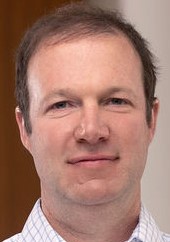 Uncertainty is the watchword when it comes to the American economy as the Trump Administration looks to shake up the political economy around the globe with allies and competitors alike. He’s also been weighing in on the actions of the Federal Reserve, who’s chair, Jerome Powell is asserting his independence in terms of determining the monetary policy of the nation. Have they made mistakes in the past? For sure. But is this the right time to lower interest rates and get back to the easy money policies which has gotten us into trouble in previous crises? That’s how our conversation begins with Todd Sheets, the author of the newsletter ‘On Wealth and Progress’ which is currently available free of charge on Substack and the author of the book, “2008: What Really Happened.” Then we begin to discuss a slowing GDP, the tariff fixation of the current Administration and where our economy needs to go from here to address our large debt and deficits and maintain our dynamic economy going forward.
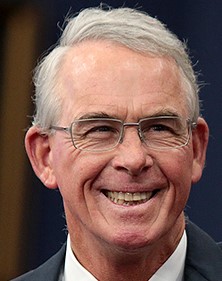 When we see the white smoke billowing from the Sistine Chapel, will it signify the more open and humanistic Papacy established by Pope Francis, the first South American Pope, or will it be a return to the more doctrinaire church led by his predecessor, Benedict XVI. Time will tell. To share his insights about it with us is Francis Rooney, the U.S. Ambassador to the Holy See from 2005-2008. He gives us his impressions about the changes in the Church under Pope Francis and assesses some of the leading figures who are mentioned as possible successors. We reflect on Pope Francis’s legacy and how the Church has weathered the storms of the recent past. We also ask Ambassador Rooney to discuss the Ukraine War and matters pertaining to the Trump Administration. He was a Congressman from Florida for four years, from 2017 to 2021. He is now affiliated with the Wilson Center.
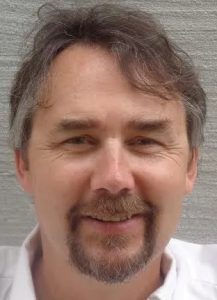 Perhaps you were following the social media phenomenon in 2023 of Flaco, dubbed ‘the world’s most famous bird’ from the night when vandals at the Central Park Zoo cut a hole in his cage until his death a year later in a courtyard on the Upper West Side. The year-long odyssey captured the imagination of New Yorkers and people around the globe as he learned to survive in this urban landscape by eating rats, squirrels and birds. This occurred despite the fact that this gorgeous Eurasian eagle-owl had spent his entire life previous to this in a cage. In the deft hands of nature writer David Gessner, “The Book of Flaco” The World’s Most Famous Bird” is a cautionary tale of the hardscapes we have built and the way nature’s other species have had to navigate them. In this age of the Anthropocene all of man’s decisions are having great impact on flora and fauna worldwide. We open up our conversation’s aperture to describe its impacts in an age of rapid global warming.
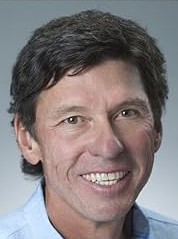 As a society we must ask ourselves what is the bottom- line consideration when it comes to health care? Is it the numbers on a spreadsheet, the self-aggrandizement of the institution’s owners or the well- being of the patient? The response should be obvious. Yet, the insidious model of private equity, now the owner of 457 hospitals in America and countless medical practices, including every specialty, and even your pet’s good care, is turning the incentive structure on its head, focused only on self -enrichment at the expense of quality care. Such a case is going on as I write this in my own community and the hospital at which I was born. It has been gutted financially by private equity plunderers and is on the verge of collapse. James Kelly RN, our guest today, and the author of “Margin Over Mission: When Private Equity Owns Your Hospital” had seen enough at his own hospital in Albuquerque, taken over by private equity. He schooled himself on the rapacious practices of this form of ownership which borrows heavily to purchase these facilities and lays the debt obligation on the care centers themselves, thus making patient care secondary to financial chicanery. Regulators of any type are very late to the effort to halt these practices, often coming in only when a vital institution in the community is on the verge of collapse. For a better understanding, please listen to this podcast.