EP 875 Is It Racist? Is It Sexist?
 These are tricky waters to navigate, but two scholars, Jessi Streib and Betsy Leondar-Wright, have co-authored a book called “Is It Racist? Is It Sexist?: Why Red and Blue White People Disagree, and How to Decide in the Gray Areas,” wade through it in their new book. It’s based on interviews with 125 white interviewees from many parts of the country and the result is a new way of understanding how inequalities persist by focusing on the individual judgment calls that lead us to decide what’s racist, what’s sexist, and what’s not. While they found a tendency to describe some people as ‘convictors’ and others as ‘acquitters’, as in a jury setting, they offer a very interesting metaphor of being more of a surveyor in determining what a set of facts, put in context, may tell us about situations we can all imagine happening, but may come to different conclusions as to ‘why.’ Our guest, Betsy Leondar-Wright, was somewhat heartened in this exploration to find that few people harbored explicit racial hostility toward people of color, but perceptions about the role of our history and that which is embedded in our institutions may not always rise to the surface when contemplating how certain actions toward ‘others’ occur.
Podcast: Play in new window | Download
 High in the Arctic, myth is melting into reality: as temperatures rise, newly ice-free waters are turning the Northwest Passage from a fable into navigable waterways. And while global superpowers, like America, Russia and China, see great economic benefit in finding a northern route that can act as a new superhighway for goods to equal the Panama and Suez Canals, at the same time we are losing sight of the real impacts on Arctic peoples, wildlife, and ecosystems. Global warming is ravaging the Arctic-and threatening the planet’s stability-while we jockey for position for control of emerging waterways. Kieran Mulvaney explores all of these issues in his great new book, “Arctic Passages: Ice, Exploration, and the Battle for Power at the Top of the World.” He is our guest today and, yes, we talk about President Trump’s Greenland fascination as well as the best tourist option for getting close to polar bears.
 Congress authorized the Justice Department to conduct civil investigations into constitutional abuses by police, such as excessive force or racially motivated policing back in 1994 as a response to the beating of Rodney King, a Black man, by white Los Angeles police officers. And in the wake of the George Floyd killing at the hands of police in Minneapolis, new federal legislation was contemplated, but never passed, and the Justice Department launched 12 ‘pattern and practice’ investigations into police departments scattered across the country. The Biden Administration’s Justice Department, under Merrick Garland, was slow, however, to enter into court-binding consent decrees that would be binding now. The Trump Justice Department has no interest in pursuing these cases and, in fact, about 100 lawyers in the civil rights division have quit because of the direction of their unit and the Department. So, basically, police reform in America is dead in this moment. To discuss the state of affairs is Jim Mulvaney, an adjunct professor in the Law and Police Science Department at John Jay College of Criminal Justice.
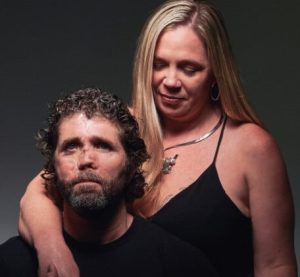 Marriages are a 50/50 proposition in America as to whether they can survive all of the challenges couples go through. For a Navy Seal, the divorce rate is closer to ninety percent. Today, on the podcast, we talk to a remarkable SEAL couple, Jason and Erica Redman, who have written the book “Mission: Invincible Marriage: A Battle-Tested Guide to an Enduring Relationship.” When you hear their story of his heroism, involving serious injuries suffered in Iraq, requiring upwards of 30 surgeries, and her sacrifices on the home front, it will remind you that the vows ‘in sickness and in health’ do really test married couples throughout a lifetime of change, tough times and new challenges throughout. You’ll learn more about them in this podcast, but you will also ask yourself what you can do to strengthen your relationship. In their view, it all starts with friendship. Take a listen and get prepared to be inspired
 While the need for strong, loving partnerships may be more necessary than ever in this complicated moment, the truth is fewer young people are even dating as other generations have done in the past, let alone marrying in their 20’s or having families. Our guest, Aleeza Ben Shalom, host of the series, “Jewish Matchmaking” on Netflix and author of the new book, “Matchmaker Matchmaker” has some great perspective on what is happening to love, dating and marriage and freely offers wisdom about how you can be sure the person you are involved with is the right one for you. While youth romance is in decline in America, many are still looking for love and Aleeza offers some novel approaches like no touch for the first five dates and date ’em until you hate ’em. It’s a fun conversation that touches on societal trends in this important aspect of life, as well as personal advice you will find useful as you’re searching for the right partner.
 Call centers are the hub of much activity these days as customers seek information or wish to buy things. Their role has changed over the years and the sophistication of the technology they use, the demands on them to streamline and cost cut with AI, and the supervisor ‘surveillance’ which measures their minute- by- minute activities, make the job more stressful than you might imagine. And while we, the customer or consumer, are frustrated by the requests to take everything on- line or do a ‘chat’ with an AI bot, the humans at the end of the line have their own concerns. In her book “Disconnected: Call Center Workers Fight for Good Jobs in the Digital Age”, author, labor researcher and organizer Debbie J. Goldman, Ph.D., describes the hard-fought battles of call center workers-one of the largest, yet most overlooked, labor forces in the U.S., even though it is the work home to over 4 million people in the country.
 Isn’t it great when you deal with a company where the principal is the owner who will take full responsibility for the actions of the company’s employees? How rare is that? Well, according to our guest, it is getting rarer by the day as systems are built to insulate humans from ever having to claim direct responsibility for any of the indignities you may face in your dealing with companies and politicians. Dan Davies, author of “The Unaccountability Machine: Why Big Systems Make Terrible Decisions and How the World Lost Its Mind,” describes how human decision-making has often been replaced by a literal algorithm and it has allowed us to have crime without criminals. No one, for example, went to prison following the financial meltdown in 2009 because we replaced individual responsibility with ‘criminogenic organizations’ designed to ensure that crimes would be committed, and no one would pay the price. Private equity deal-making, which we have reported on previously, offers guilt free destruction of whole industries. Impress your friends when you explain to them what an ‘accountability sink’ is after listening to this podcast.
 Mark Twain evolved over his adult life when it came to matters of race. In perhaps the greatest American novel of all time, “The Adventures of Huckleberry Finn”, Twain demonstrates his keen sense that the Civil War did not end prejudice and bigotry in our society, though it did reshape its contours. There is no better example of Twain’s growing appreciation for the contributions that African Americans had and could make in American society than his depiction of Jim in the book. Jim is shrewd, self-aware, and a deeply admirable man. Based on people Twain knew, he was one of the first fully realized Black fathers in American fiction. After you listen to my discussion with the leading interpreter of Twain’s work, Shelley Fisher Fishkin, author of “Jim: The Life and Afterlives of Huckleberry Finn’s Comrade”, you will, as I did, gain a whole new appreciation for this classic piece of literature and for what Twain was trying to tell us. While much controversy has surrounded this book and Twain’s use of ‘authentic speech’ with his characters, and how we should perceive Jim, the light she sheds upon the subject is remarkable. She further shares some of Twain’s writings which provide us with a glimpse into how he would view this moment in American history. Would it surprise him to see what is happening? Take a listen.
 Should gold and silver be a part of your portfolio? And, if so, how and when? With precious metals prices surging is it too late to invest in them or is it just the right moment? There are so many factors at play here that most advisors will tell you it’s all right to make it a part of your holdings, but not too much. And if they agree with having some holdings in this category, they will want use to you it as a hedge against inflation and market volatility. Then, you ask, how do I purchase it? In physical holdings? Or IRA’s or ETF’s? Since gold recently pierced the psychological milestone of $3,000 an ounce, these questions are on a lot of people’s minds. For that reason, we invited Jordan Roy-Byrne, founder of The Daily Gold, and author of “Gold & Silver” The Greatest Bull Market Has Begun” to join us to discuss the many issues surrounding gold and silver.
 In 2024, Latinos, a diverse population in America, gave Donald Trump more support than Republicans generally receive for their presidential candidate. He was speaking quite openly of his plans to shut down the border and pursue illegal immigrants, first those involved in gangs and illegal activity, and then others who crossed into the United States without documentation. Having seen this play out in the first 100 days of the second Trump Administration, we decided to go back to an authority on the subject, Sam Quinones, to gain his perspective on how those policies are playing out. Mr. Quinones is a veteran reporter on immigration, gangs, drug trafficking and the border. A former reporter for the L.A. Times, he has written acclaimed books like “Dreamland” and “The Least of Us” focusing on these issues.