EP 567 How Can We Whip Inflation Now?
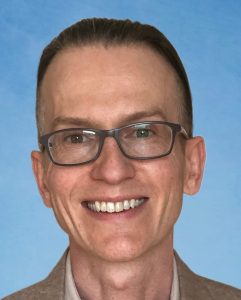
 It’s likely that when you see double digit increases in the price of food, energy and other essentials, you are in a state of inflation. As anyone who uses our currency, in whatever fashion knows, that’s the place we find ourselves today. It’s having a major impact on household budgets and causing reactions in markets and in federal monetary policy. Harder to determine is what are the factors that brought it on and what you do about it to bring those inflation numbers down. Our guest, Nathan Lewis has co-authored a book with Steve Forbes and Elizabeth Ames, called ‘Inflation: What It Is, Why It’s Bad, and How To Fix It’. They attribute our present circumstance to the massive amount of money created out of thin air by the Federal Reserve in the wake of the housing crash in 2009 and in response to the COVID-19 emergency in recent years. In their view that has significantly weakened the value of the dollar. Others say that supply chain issues and the quicker than anticipated rate of recovery have overheated the economy. In any event, as impactful as inflation is the dollar is still king among all currencies and borrowers still buy U.S. debt. Our discussion got to the hottest topic in financial circles: Modern Monetary Theory. You need to be aware of what it is, agree or disagree with it.
Podcast: Play in new window | Download


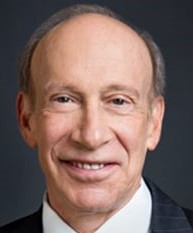
 It is very hard to typify what America’s relationship is with China. We are economically co-dependent and yet we’re competitors. Some say we’re frenemies in the world; yet others say be realistic and recognize that they are adversaries, growing into potential enemies, based upon their growing defense posture and designs on Taiwan. And when we do business with Chinese companies are we actually dealing with an increasingly aggressive and controlling Chinese Communist Party? As consumers we must admit that while we like the low prices, there may be a high price to pay in propping up this regime and limiting jobs opportunities in the United States. I told you this was complicated. Our guest, Isaac Stone Fish, author of ‘America 2nd’ has lived in China over the years and understands the subtleties of the relationship in its many forms. He clearly draws a distinction between the actions of The Party and the culture of the people and one of the world’s oldest civilizations. He also provokes us to think about what each country wants from the other and the unwitting help that many influential Americans have given China as they accept the money and prestige that their dealings with the country may provide.
 The International Center for the Study of Violent Extremism(ICSVE) has spent a lot of time monitoring and reporting on the actions and motivation of threats from extremists abroad. Circumstances on the ground in America have forced the Center to focus new attention on the activities of home grown extremists in our midst. What might have been considered a scattered and disorganized grouping of fringe players congealed to attack our U.S. Capitol on January 6, 2021, a first for our nation. It also served as a wake-up call that groups like QAnon, the Proud Boys and Oath Keepers must be taken seriously, as the FBI has been alerting us. Dr. Anne Speckard Director of the ISCVE joins us to discuss a report generated by her and other researchers in her group after spending a summer inside QAnon and white supremacist online forums. They designed a study to observe online forums populated and run by such groups with the aim of gaining a clearer understanding of not only what draws people to join them but also to determine how QAnon plays a part in the radicalization process. Dr. Speckhard’s team included Wilson W. Warren, Kate Strezishar and Molly Ellenberg. We discuss their chilling finds today.
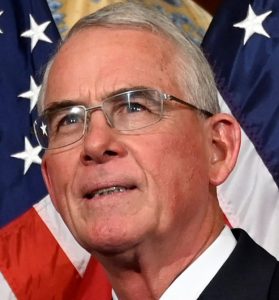 The aftermath of the war in Ukraine is uncertain because so much depends on the outcome, but speculation is that relations between the United States and its European partners will take a long time to mend with Russia. Trust has been shattered in the wake of this horrific attack by Russia on a neighboring state. The question becomes what will the world look like and how will America approach this former bitter rival? There are diplomatic, economic and military considerations that will all come into play. And while the NATO alliance has been re-assembled by President Biden, will that diverse group of nations, with differing interests, particularly as it relates to energy needs, hold firm if the United States seeks to maintain sanctions and follow the course of containment as in the days of the Cold War. Now, of course, there are other considerations including the growing influence and power of China, with the ability to upend any strategies that they find counter to their interests. It’s a complicated picture. Here to help us sort it out is the former U.S. Ambassador to the Holy See, Francis Rooney.
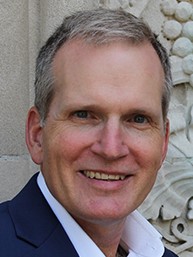 The numbers suggest that America is in the midst of one of the largest labor upheavals in decades. The resurgence in workers declaring their rights has benefited labor unions who are now emboldened and getting a second look from younger workers. The new found confidence that the worker is in a stronger position is exemplified by the fact that 100,000 unionized workers have voted to authorize strikes in the recent period across a range of industries. Given worker shortages, they now have little fear that they will be replaced should they walk the picket line. It’s a moment unlike any for working people in decades. Having a Democratic president who is sympathetic to unions, and very open about it, doesn’t hurt, either. Peter Berg, professor of employment relations and the director of the school of Human Resources and labor relations at Michigan State University, joins us to discuss.
 The baby formula crisis in America caught many off guard, but not our guest on this podcast. Richard Williams, Ph.D., served as the director for social science with the Center for Food Safety and Applied Nutrition at the Food and Drug Administration. He is the author of ‘Fixing Food: An FDA Insider Unravels the Myths and the Solutions’. He was our guest on a previous podcast discussing the inner workings of the regulators at the FDA. We asked him back to discuss the specifics surrounding this massive baby formula problem made worse by actions, or in actions, of the agency. You will want to hear his perspective.