EP 825 Does America Have a Strategy to Reshore Lost Manufacturing Jobs?
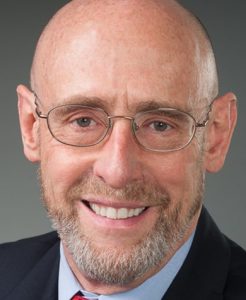 We have been talking about returning manufacturing jobs to the Rust Belt of the Midwest and the once vibrant manufacturing hubs of the Northeast for a long time. Almost since much manufacturing moved offshore about 50 years ago, leaving behind empty husks of buildings, environmental damage and broken lives. Yet doing so is easier said than done. America has become an economy known for its innovation, strong service sector and a consumer-driven economy. Yet, manufacturing jobs, not the old sooty ones, but advanced manufacturing has a multiplier effect on an economy, helping to generate five times its value for every person on the factory floor. While the Biden Administration passed major pieces of legislation to reshore, for example, our chips and clean energy industry, it is not enough to make us the once great manufacturing engine we were in the mid twentieth century. The incoming Trump 2 administration is looking to tariffs to do the trick. The reasons for our demise in this area are many. How we regain that dominance is an open question given the remarkable advances by China and others in supplanting us in this regard. To discuss all of is Harry Moser, the founder and president, of the Reshoring Initiative(reshorenow.org).
Podcast: Play in new window | Download
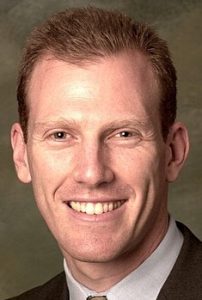 Interconnected technological change is happening more rapidly than at any time in history and on such a scale that its impacts will be profound in fields as diverse as health, food production, and the strength of the overall economy. It may even bail us out from our assaults on the planet. In a clear-eyed and easily understood manner, Jamie Metzl, a leading futurist and One Shared. World founder, explains all of this in his new book, “Superconvergence: How the Genetics, Biotech, and AI Revolutions Will Transform Our Lives, Work and World.” The challenge we face is that while our ability to engineer the world around us is advancing exponentially, our processes for understanding the scope, scale, and implications of these changes, and for managing the “godlike” powers wisely, are not keeping pace. His thinking is bold and inspiring as he explores with us the transformative nature of human knowledge, with a particular focus on biology and the life sciences. CRISPR babies? Doctors performing gene therapy? Analysts storing data in genes? What is happening here? A brave new world, indeed. Find out on this podcast.
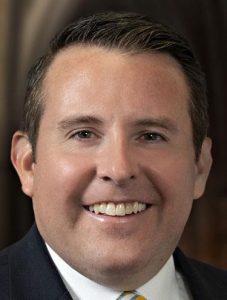 There was a time that America sensed that the right leader came along at the right time and pulled us through many crises–war, The Depression, pandemics and other economic travails. I am not certain we feel that way about some of the recent commanders in chief. Yet history reminds us we have had many forgotten chief executives who made it necessary for us to replace them with someone who could fix the mess they left behind. I am referring to a number before and after the Civil War. Is it that they didn’t live up to expectations or that we simply made the wrong choices? In any event, William Haldeman, in his new book, “Meeting the Moment: Inspiring Presidential Leadership that Transformed America,” singles out the qualities needed in a President-like judgment, ingenuity, dedication, courage, confidence and optimism and points to those who had these qualities and the telltale signs of their greatness. As we approach a transfer of power at this moment, it is a good time to reflect on these values and fall back on them as we evaluate our leaders going forward.
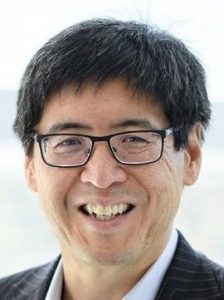 Math is used by campaign strategists to help politicians decide where to travel and spend money when running for office. The same kinds of calculations can help ordinary citizens make the best use of their time and resources. And for change agents who want a more representative democracy, these simulations and ‘what-if’s’ might give us the empirical data to evaluate what might occur if, for example, we eliminated the electoral college and went to a popular vote method, had open primaries for congressional districts and other offices and employed some form of rank-choice voting. Our guest, Sam Wang, is a Neuroscience Professor at Princeton University and the Director of the Electoral Innovation Lab, where they developed the Voter Maximizer, which performs a non-partisan mathematical and strategic analysis to identify races and ballot questions where the per-voter impact is greatest. Their work does not center on campaigns, but rather on the individual voter. It’s a fascinating lens into our political and electoral systems.
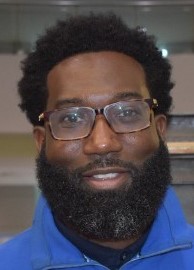 When we think of institutions that define welcoming spaces to convene and conduct business in virtually every community in America the local library is first and foremost. It represents the one place in which you can build social cohesion, promote civic renewal, and advance the ideals of a healthy democracy. And where you can get a potboiler of a new novel, share your computer skills for research with others, attend a multitude of programs or watch children’s eyes light up as part of story time programs and other tactile experiences, like learning a percussive instrument. All of that and so much more takes place within libraries which are staffed by creative professionals who are engaged in designing new learning experiences for young and old. In his new book, “Meet Me at the Library: A Place to Foster Social Connection and Promote Democracy”, Shamichael Hallman reminds us of all that libraries represent in a time when loneliness and isolation demand that we find public spaces to bond and forge new relationships. The library serves this purpose…and so much more.
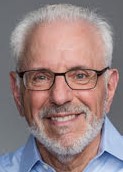 We have been the powerhouse on the world’s stage since WWII and we virtually stood alone as a dominant force since 1989 when the Berlin Wall came down. While there have clearly been wobbles since, like the Iraq debacle, we now must envision a new era in foreign policy, both because of the rise of our major adversary, in China, as well as the new Trump Administration’s uneven support for NATO and the alliance that has secured the peace throughout this modern era. Edward Goldberg, an NYU professor, and the author of “The United States as Global Liberal Hegemon: How the US Came to Lead the World”, leads us through this changing political landscape. While we use our military, economy and geography to straddle the globe as the major force still, are those days coming to an end? And, if so, what are the implications of this changing dynamic? We discuss today in detail on this podcast.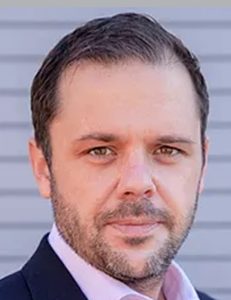
 Our guest on today’s podcast, Rafael Martinez, is an assistant professor of Southwest Borderlands at Arizona State University. There he focuses on immigration, migration, the US-Mexico Borderlands, and the American Southwest. Through that work he demonstrates how communities along the US-Mexico border contribute to the social, political, and economic fabric of the US. He calls himself am ‘undocu-scholar’, a DREAMer, as part of the Deferred Action for Childhood Arrivals (DACA) program, which offered certain protections to young people like himself. He discusses the many issues surrounding immigration and particularly the rise of undocumented youth social movements in 21st century America. He documents their efforts in his book, “Illegalized: Undocumented Youth Movements in the United States.”
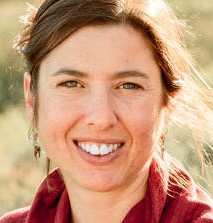 For some years, we’ve been told that the ice melt in Antarctica, Greenland and other places in the cryosphere represent the harbinger of things to come announcing the profound effects of global warming on the planet. Little did I know that a new discipline has developed around ‘ice patch archeology,’ which ties us to the environment and culture of the past. Science journalist, Lisa Baril, in her new book “The Age of Melt: What Glaciers, Ice Mummies, and Ancient Artifacts Teach Us About Climate, Culture, and the Future Without Ice,” excavates a tour of ice for us, exploring the conflicting belief systems around ice and its integral relationship to people. Interestingly, the more the ice melts the more we learn about the past and yet, at the same time, it compromises our future. The meltwater is critical to the fresh water we drink and utilize in many parts of the world, but this sustainer of life can only do its job when it releases seasonally not in the overwhelming torrent that continued warming will eventually lead to. We are in a race against time. Can human ingenuity get us past this man- made crisis? We’ll discuss today.
 The U.S Senate has many important responsibilities. Among them are making laws, ratifying justices to the U.S. Supreme Court and other federal courts and approving presidential nominees for key Cabinet positions. For the newly re-elected Donald Trump Administration the latter responsibility is key to determining whether the chamber is ready to step up to its constitutional responsibility as a separate branch of government or whether its GOP majority will simply go along with questionable nominees in order to accede to President-elect Trump’s desires. It will be a bellwether of what is to come from the branch of government that can put a check on a new President who seems to want to put the Imperial Presidency on skates. Will they? Early signs that they may be taking seriously their independent role was the selection of Sen. John Thune as the Republican Majority Leader and the pressure they exerted to force Matt Gaetz to withdraw his nomination for Attorney General. Joining us to discuss what to expect from the Senate is a man who has worked there and written a trilogy of books about the last sixty years of the Senate. Ira Shapiro’s latest book is “The Betrayal: How Mitch McConnell and the Senate Republicans Abandoned America.”