EP 815 Can Elon and Vivek Make the Federal Government More Efficient?
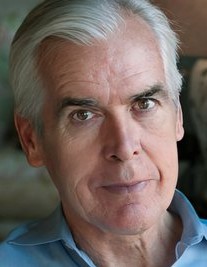 The real question is whether that is even the goal and purpose of the Department of Government Efficiency (DOGE). Or is it retaliation for Donald Trump’s inability to bring bureaucrats to heel in his first administration? We will find out in short order because it’s a race against several clocks–the ‘mandate’ claim which gets smaller as all votes are counted, the Democrats to find their voice after a loss that stunned many, Congressional Republicans to realize they have mid- term elections to survive and union lobbyists and lawyers to push back against any serious tinkering with the federal workforce and programs, to blunt the force of what’s proposed. We’ve had Commissions and several efforts like this in the past under Democrats and Republicans, and it’s had little effect on the growth of government. Philip K. Howard, who founded commongood.org, has been seeking simpler governing frameworks that honor the role of human judgment and responsibility for years now. His work is serious and intentional. In this podcast, he describes what he believes should be done and casts a doubtful eye on the approach being taken by DOGE.
Podcast: Play in new window | Download
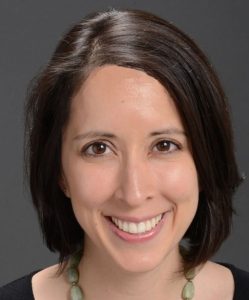 Zoning has been used by local communities to open up possibilities for some and shut them down for others; to beautify some spaces or change their character not for the better and to recognize current realities or live in the past. Once we recognize the power of zoning, we can harness it to create walkable and vibrant communities, resist the monotonous effects of suburban sprawl, integrate exciting design elements and work toward important goals like more affordable housing units, public transportation and creative housing options surrounding it. Zoning may seem like an invisible force shaping our communities but, in most communities, much ink has been spilled defining the most common districts: commercial, residential, industrial, open space and mixed districts, even creating ‘special districts’ to encourage, say, entertainment venues in an area. In her new book “Key to the City: How Zoning Shapes Our World”, legal scholar and architect Sara Bronin reveals the impacts of zoning for good and ill. Many cities have not revisited their zoning codes for years, leaving in place ordinances that maintain racial segregation, prioritize cars over people, and enable great ecological harm.
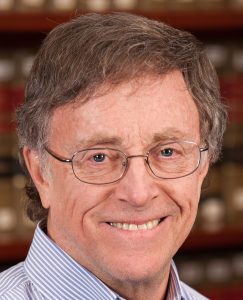 But isn’t that unconstitutional? That was the basis of my line of inquiry on this podcast with esteemed professor, Ira Lupu, George Washington Law Professor Emeritus and a nationally recognized scholar in constitutional law with an emphasis on the religion clauses of the 1st Amendment. Legal or not, Oklahoma’s superintendent of schools, Ryan Walters, has ordered public schools in the state to teach the Bible and wants funding for a controversial religious charter school, though the state’s Supreme Court has struck that down. Louisiana leaders directed schools to display The Ten Commandments and Texas leaders proposed a curriculum that incorporates biblical lessons. In these red states, where there are large evangelical Christian residents, infusing Bible teachings into the curriculum is gaining traction. There is a growing belief that the U.S. Supreme Court is now more predisposed than in any other era to uphold such mandates requiring religious education if a suit comes before it. Professor Lupu is a pre-eminent thinker in this aspect of law and is wonderful to listen to. He discusses this topic in nuanced ways that you’ve likely never heard before.
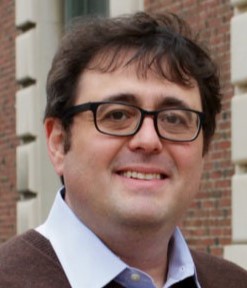 Since Hamas’s attack on Israel last October 7,2023 the term “settler colonialism” has become central to public debate about Israel and the Palestinians, particularly in academic circles and among young people. And while the concept may be new to most Americans, settler colonialism is shaping the way many people think about the history of the United States, Israel and Palestine. It is a history we share along with countries like Canada and Australia, whose modern identity is based on having subjugated Indigenous Peoples in order to establish what we recognize today. So, the question then becomes, centuries later, is our founding, its core documents and political legitimacy illegitimate? If you believe that it is, then what is the remedy? Decolonize? Make reparations? Or look away because the claims and remedies may be too difficult to even imagine. Adam Kirsch, author of “On Settler Colonialism: Ideology, Violence, and Justice”, joins us to try to make sense out of a fascinating, but difficult, subject.
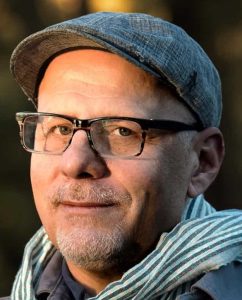 Benjamin’s Franklin’s contributions to his times, and our country, are too numerous to restate. His greatest gift, however, may have been his philosophical approach to living a ‘useful’ life right until the very end. And while the self-help movement of our day has its own exemplars, going back and revisiting his 13 virtues and his willingness to evolve and change, and admit to errata(mistakes), may be as important as his many experiments with electricity or his role in our nation’s beginnings. In fact, even if Benjamin hadn’t been the only one of the Founding Fathers to have signed all four of our nation’s foundational documents, he would have been the most famous Founder because of his extensive travel abroad, according to Eric Weiner, author of “Ben & Me: In Search of a Founder’s Formula for a Long and Useful Life.” As the author has gotten older and begun thinking about his role and purpose at this stage of life, he found guideposts in living a life in full by reading what Franklin said and seeing what he did. He shares some of the lessons here and more in this insightful book.
 Our guest, Peter Schwartzstein, is a journalist on the climate security beat. He’s immersed himself in some of the hot spots of the world, like Syria, for years during its civil war to unpack the story of how global warming is adding to, if not a key precipitant of, conflicts in many parts of the world. This is particularly true in the Middle East, South Asia and Latin America where intensifying gang warfare in urban neighborhoods to ‘old school’ piracy are raging. The climate plays a role in adding to a variety of other destabilizers when we consider how dependent many regions are in living off of the land. This only makes sense. Historically we have seen, for example, the role that water, or lack thereof, has played in disputes between nations. In his book, “The Heat and the Fury: On the Frontlines of Climate Violence”, Schwartzstein describes in vivid detail how global warming can unleash dislocation, exhaustion and a sense of powerlessness. And while this phenomenon is most aggravated presently in poorer countries in warmer climates, he can see how it has the potential to push over to wealthier nations going forward.
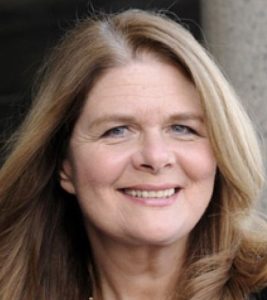 How polarized are we, really? While the extremes in both ideological camps may be smaller in numbers than mainstream opinions their effect on our political dialogue and the conveyor belt of lies and distortions on social media amplify and accelerate those differences. Thus, it feels like we are in a pitched battle for the soul of America. The echo chambers distort so much of what is heard and seen that you feel like you’re in a fun house of sorts. So how do we, everyday commonsense Americans, render the ‘stridents’ less powerful than they appear to us. In her well thought out and researched book, “Remaking the Space Between Us: How Citizens Can Work Together to Build a Better Future For All”, Diana McLain Smith provides us, as she has business leaders for years, on a “Leading Through Relationships(LTR) approach which has been used around the world to convert debilitating intergroup conflict into a constructive force for change.
 Longtime Defense researcher Luis Elizondo has become associated with reporting on the existence of UFOs(unidentified flying objects), now known as unidentified anomalous phenomena(UAPs). He made headlines in 2017 when he resigned as a senior intelligence official running a Pentagon program investigating these objects in the sky and alerted the public to the fact that the secrecy and lack of resources devoted to this topic was denying the public of its right to know about this long discussed topic. His disclosures caused much ruckus and has led to serious discussion about the topic, to the point where Congress, on a bipartisan basis, is taking the matter seriously. Elizondo posits that we are not alone and, in fact, states in his new book “Imminent: Inside the Pentagon’s Hunt for UFOs” that “humanity is, in fact, not the only intelligent life in the universe, and not the alpha species.” His thoughts, observations and first hand knowledge of the subject make for a fascinating conversation.
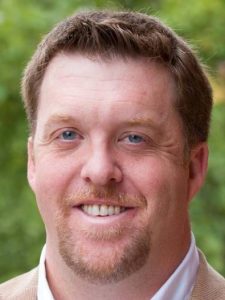 What kind of question is that, you may ask? We’ve always had grades. How would we evaluate performance without them? Is this just another ‘woke’ idea, like participation trophies for playing the game? How will they learn to compete in this dog eat dog world awaiting our students? Joshua Eyler, director of the Center for Excellence in Teaching and Learning and a clinical assistant professor of teacher education at the University of Mississippi and the author of “Failing Our Future: How Grades Harm Students, and What We Can Do About It” has answers to all of those questions. He illustrates in his book how grades interfere with students’ intrinsic motivation and perpetuate the idea that school is a place for competition rather than discovery. In his research on the subject, he feels that grades actually impede the learning process. He provides alternative ‘grading models’ which are being adapted in certain educational settings as we continue to see student anxiety and mental health issues go off the charts. It’s a very interesting discussion.
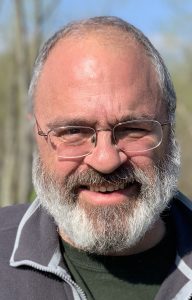 While the rankings for U.S. News & World Report seem to get most of the attention, perhaps there’s another lens we should put on the ranking process. Paul Glastris, editor-in-chief of Washington Monthly, once worked there and sensed that there is a better scoring system to reflect the needs of more students across the country, so he designed one. His is not based on selectivity, endowment size, and name recognition. Rather it reflects well on the colleges and universities that focus on social mobility, affordability, and provide educations that lead to careers in public service and jobs that allow students to pay off their student debt. You may find it interesting that schools with “State” in their name do very well. The September/October issue of his magazine features great articles about where you can get the best bang for the buck, a university that’s breaking the mold by doing the opposite of what the trends are in higher education and how to escape what’s called “Higher Ed’s Bermuda Triangle.” This podcast breaks it all down and toplines what these articles explore in depth. It’s all worth a listen and a read.