EP 905 Can the Euro Survive More Crises?
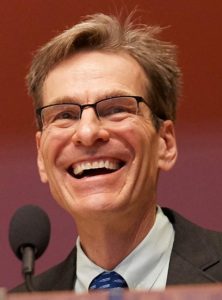 The euro survived crises unimagined at its founding in 1992, giving European countries a common currency. First there was the financial meltdown of 2007-2009, the sovereign debt crisis of 2010-2012, the pandemic and the Russian invasion of Ukraine. The European Central Bank (ECB) pushed back against these ill winds with dramatic policy innovations, like buying up vast amounts of debt and providing large loans to banks. In the midst of turmoil those seem to have been the right things to do. Now, however, is it expected that the ECB will intervene routinely, expanding the limited mission (to use interest rates to pursue price stability) it was given at its birth? That is a key question going forward. Our guest, Stanford professor, John Cochrane, along with co-authors Luis Garicano and Klaus Masuch, provide prescriptions for maintaining this monetary union in their new book, “Crisis Cycle: Challenges, Evolution, and the Future of the Euro.”
Podcast: Play in new window | Download
 To many, the term “Black Capitalists” tips an equation upside down. Black people were the labor force that built the infrastructure of American capitalism through the violent dictates of legalized slavery, so is it possible in this moment to see Black people as beneficiaries of this system? And if they are starting to amass capital, what are they doing with it? According to our guest, Rachel Laryea Ph.D., author “Black Capitalists: A Blueprint for What Is Possible” those who deserve this nomenclature are those who are strategic in using their wealth in order to create social good. Her book is replete with examples of those who do not take a winner-take-all approach to the accumulation of money. Our guest says that the term “Black Capitalists” is race agnostic–an invitation for everyone to strive towards social good and monetary profit in their everyday economic transactions. While anyone can participate in a capitalist system with a more equitable and inclusive approach to it, she points out how race profoundly shapes the way people participate in our economy
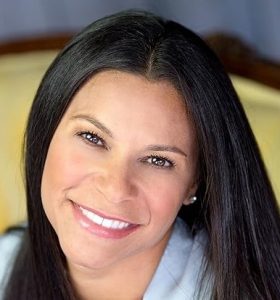 Oh, the times they are a changing’. While the focus in a slew of parenting books has been on infancy, adolescence and the teenage years, little has been focused on as it relates to ages 6-12, which is deemed middle childhood. To many parents there’s a sense that the heaviest lifting for them is over. And yet the research is telling us something different. In her new book “The Crucial Years: The Essential Guide to Mental Health and Modern Puberty in Middle Childhood (Ages 6-12)”, clinical psychologist, Sheryl Gonzalez Ziegler, tells us that this next phase of child development may be different from that which we remember, because of early onset puberty, social media and peer pressure caused by it. The child is now facing new pressures from other adults, such as teachers, and schoolmates. Their brains and their bodies are going through changes that can be confusing to them and their parents. Thankfully, we have an expert with us who can explain the psychological and physiological elements at play at this stage.
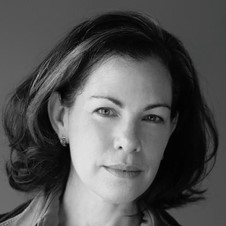 There are over 400,000 children in foster care in America, costing the state and federal government over $30 billion a year. So, is the system working? It’s hard to say the system is failing, but perhaps it’s more accurate to say that adults all along the way–from the biological families to a host of caregivers–are unable to build the attachments and connections which can lead to a healthy adult life. How else can we explain the fact that children who have been in foster care exhibit nearly twice the rate of PTSD as Iraq war veterans? Childhood trauma can result in greater likelihood of arrest and imprisonment and even shorter lifespans. To dissect this complicated issue, our guest, Claudia Rowe, author of “Wards of the State: The Long Shadow of American Foster Care” followed six foster kids across the country for a number of years to really study the effects of their experience. The book, and our conversation, are eye-opening.
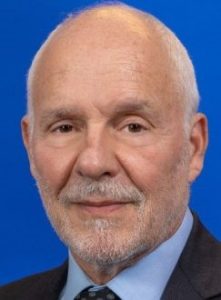 Most of what we hear lately about higher education relates to the legal battles between the Trump Administration and Harvard, the nation’s oldest university. And while prior to this the leading issue in the news was student debt and overall affordability of college, there are a number of issues that have come to the fore. Among them is return on investment as while collar graduates find it more difficult to find jobs given the barreling and hard to imagine impacts of AI, the demographic cliff in which fewer students are coming through the college age cohort and the growing set of choices, not all well vetted, of alternative paths by way of certificate programs offered by all manner of institutions. Our guest, Mark Schneider a non- resident senior fellow at the American Enterprise Institute (aei.org) specializing in higher education administration takes my questions about all of these issues on today’s podcast.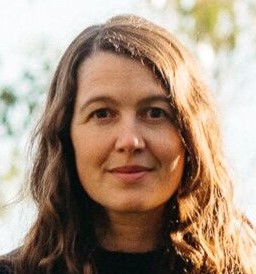
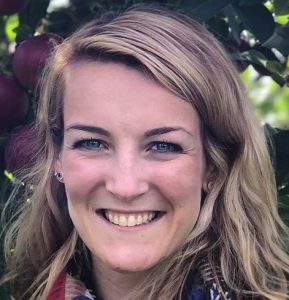 As a dog parent, I bristle at doggie dress-ups at the local pet supply store, yet I still eat meat. Call me a hypocrite. I accept the critique. And yet when it comes to animals, there is a stratification as to how we treat them and the title of a book published a few years back most aptly put it, “Some We Love, Some We Hate and Some We Eat.” Our guest, Elizabeth Melampy, author of “Forget the Camel: The Madcap World of Animal Festivals and What They Say About Being Human,” and an animal rights attorney, tries to answer in the book the profound question of what makes humans different from animals, since as we are reminded early on in it that our origin story must start with accepting the fact that humans are animals. The modality she uses to expertly delve into the subject are the dozens of festivals around the country that use animals as the central theme. It becomes clear, like the doggie dress ups shows, how we often disregard the needs of the animals even as we host events seemingly in their honor. We go on to discuss a range of animal rights issues in this compelling podcast.
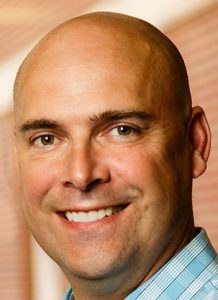 Let’s start with the basics. What are ‘forever chemicals?’ And so this podcast begins with Professor Matt Simcik, an environmental chemist from the University of Minnesota, trying to explain to me, a layman, what they are. They have been in the news lately and there are now efforts around the country to limit their use and our exposure to them. They are otherwise referred to as PFAS chemicals which have been around since the 1940’s. They are manufactured and engineered to be strong, with a durable carbon-fluorine chemical bond. Like many other industrial developments, PFAS chemicals were created with good intentions–to keep people safe, offer convenience and spur economic growth. Much later, we find that their use brings with it health risks particularly in our food and water. Let’s leave it there and allow our guest to bring his expertise to the subject. Stay until the end when he describes what each of us can do to minimize our risks with ‘forever chemicals.’
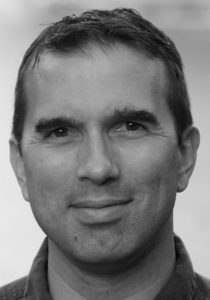 Pneumatic drilling from building sites. The dull roar of planes overhead. Your fellow worker’s phone conversations in an otherwise silent office. The suburban drone of lawn mowers and blowers. Noise seems to be everywhere, and it can disrupt our sleep, ratchet up our stress, destroy our concentration–yet it’s a problem we shrug off once the immediate annoyance passes. In truth, noise is one of the most pervasive pollutants in our daily lives. It can cause health problems for people and wildlife, both on land and sea. For humans it can, of course, cause hearing loss, and this is a growing problem for young people as they accessorize with devices early on to amplify their music. It can lead to high blood pressure and have impacts on longevity overall. Chris Berdik, our guest and the author of “Clamor: How Noise Took Over the World and How We Can Take It Back” joins us to discuss an issue we pay too little attention to.
 While both parties have long histories with gerrymandering Congressional districts for partisan advantage, it’s fair to say Republicans have taken it to a new low by interrupting the every ten -year process, based on the census, and doing it at halftime of this cycle. In the process, they are encouraging Democrats to do the same. The problem is that many states controlled by Democrats in the Governor’s office and the state legislature, have assigned this responsibility of redistricting to independent commissions or more elaborate bipartisan processes. The concept of carving up districts for clearly partisan advantage has made our politics more radical and divisive. To explain what gerrymandering is, the Supreme Court’s acquiescence, the stakes involved and the impact on governing is David Daley, of FairVote (fairvote.org), and author of three books related to our electoral process. He is considered by many to be our leading writer on this subject. His latest book is called “Antidemocratic: Inside the Far Right’s 50-Year Plot to Control American Elections.”