EP 895 Independent Voters are Little Discussed and Yet the Key to Many of Our Elections
 When political discussions take place, they are often focused on how Democrats or Republicans, conservatives versus liberals or red in relation to blue look at an issue. They leave out a component of the electorate which grows in number and importance year after year–the independent or unaffiliated voter. In fact, if you really analyze the results of the 2024 presidential election, Democrats came out for Kamala Harris at a 95 percent clip while Republicans came out for Donald Trump at a 91 percent figure. So why did he win? First 6 million fewer Democrats came out than in the 2020 campaign but, perhaps more importantly, independent voters supported Trump by an eight percent margin. In an era when the parties have grown more partisan and ideological, those voters, often in the middle, who do not look at issues in those terms, but rather individually, start their voting lives as independents and make it very difficult for pollsters to predict their behaviors. Lura Forcum, president of the Independent Center (independentcenter.org) discusses the role of the independent voter and how they scramble the way we should look at our current day politics.
Podcast: Play in new window | Download
 Can your star quarterback on a powerhouse Division 1 football program get paid as it stands today? After the recent $2.8 billion settlement in House v. NCAA, which enables universities to directly pay college athletes for their athletic participation, the answer is yes. First came the NIL ruling in which college players could get paid for their ‘name, image and likeness’, then the transfer portal and now the floodgates are opening as legislative proposals in Congress would augur in a completely new way of looking at the college athlete. In one proposed piece of legislation, they would be considered employees who can collectively bargain. Another legislative proposal in the House of Representatives provides an alternative to this approach. Nevertheless, the NCAA’s old guard the door approach suggests a very different future is barreling through. What this will look like and its impact on many schools, women’s programs and niche sports is very uncertain. Roger Noll, Stanford professor emeritus of economics, who is considered the ‘Godfather’ of sports economics (a title he eschews) joins us to discuss a very fluid situation. There’s no one better in the country to explain it.
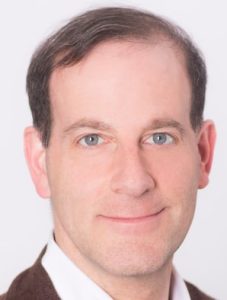 The U.S. Congress passed the Community Reinvestment Act (CRA)in 1977 with the key objective of ending redlining, the decades-old practice of neighborhood discrimination by banks against African Americans and others based on race and income. The race-based rejection of loans to creditworthy residents of redlined neighborhoods delayed the American dream of homeownership for generations. Our guest, Josh Silver, author of “Ending Redlining Through a Community-Centered Reform of the Community Reinvestment Act” offers us a comprehensive analysis of a half century of CRA-related legislation and banking regulation which is a bulwark of tangible differences in communities like Baltimore, Philadelphia and Birmingham. And while he feels changes need to be made to modernize CRA in an era of online lending and continued racial wealth gaps, his defense of the measure is full-throated almost 50 years since its passage.
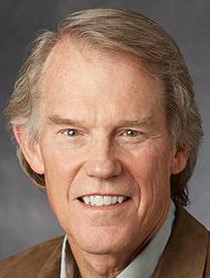 There is irony in a man determined to use the powers of the presidency and the administrative state capacity to disassemble the administrative state, aka ‘the deep state.’ Yet that is what we are seeing with the Trump Administration. The military, Department of Justice, homeland security and ICE are all aspects of the administrative state. And the administrative state is a symbol of the evolution and expansion of our federal government ever since the 1930’s and FDR’s New Deal. Since, at least 1980, the Republicans key project has been to try to take it apart because its goals have also trended along progressive lines. However, Ronald Reagan and the Bushes never tried to accumulate massive authority, as strongmen, in the way that Donald Trump is now attempting…and succeeding at doing. The Imperial Presidency has to crown its champion, despite the founders attempts to limit the powers of the executive. To discuss this timely subject is Terry Moe, co-author with William Howell, of the book, “Trajectory of Power: The Rise of the Strongman Presidency.”
 Attorney Ira Shapiro is a man who has seen it all in Washington. As a long-time U.S. Senate staffer, he has written three books about the upper chamber. The collection has been described by one scholar as an ‘epic trilogy’, capturing sixty years of Senate history. He was the chief U.S. trade negotiator with Japan and Canada in the Clinton Administration and now he shares his vast knowledge of the affairs of the U.S. Capitol on Substack with a post titled “Truth Be Told.” I wanted Attorney Shapiro to come back because I have interviewed him twice before and felt that with norms being shattered by this Administration he would have a lot to say on a range of issues. I was not disappointed.
 Many lawsuits have been brought against the second Trump Administration on the basis of overreach of its authority in trying to enact policies. President Trump declared victory over ‘radical left wing judges’ when the U.S. Supreme Court declared that the concept of the ‘universal’ injunction, wherein one lower federal court can make a ruling which then becomes the law of the land. This process has been used by courts to address issues of presidential power under this and previous administrations. However, the Supreme Court justices did say that they would consider cases that came back to them as part of a class action or under the Administrative Procedure Act. Professor David Marcus, of UCLA Law School, explains what the Court is looking to see in order to rule on such cases, such as the one dealing with birthright citizenship, known as Trump vs. CASA. The Supreme Court vacated the “universal” injunction and encouraged the plaintiffs to come back using other methods. They did offer a caveat that the formation of a class for the class action suit would have to meet rigorous standards. Professor Marcus will explain what’s happening here. Take note because this is a big deal, particularly given the proclivities of this Administration.
 In 2019, the quiet suburb of New Canaan, Connecticut was shocked by the disappearance of Jennifer Dulos, a mother of five who vanished one morning after dropping her kids off to school. In 2020, her husband Fotis Dulos–with whom she was locked in a contentious divorce–and Fotis’s lover, Michelle Troconis, were charged with Jennifer’s murder, despite the fact that to this day Jennifer Dulos’s body has never been found. There has been a fascination with the events and facts in the Dulos case and it has spread across a growing empire of true crime media–articles, books, podcasts, TV shows and on social media. The fact that this story is part of the growing interest in the ‘missing white women syndrome’ in a town of great affluence and that the husband killed himself rather than going to prison, adds to the fascination with the case. Rich Cohen puts us in the center of what happened in his new book, “Murder in the Dollhouse: The Jennifer Dulos Story,” as he successfully attempts to paint a complete picture of the victim. We also discuss the reasons for the wild success of true crime reporting across so many genres.
 America is a leader in scientific pursuits. This fact that is underpinned by much evidence. While the United States represents only 4 percent of the world’s population it accounts for over half of science Nobel Prizes awarded since 2000, hosts seven of the Times Higher Education Top 10 science universities, and has introduced to the world firms like Alphabet (Google), Meta and Pfizer that have parlayed federally funded discoveries into billion-dollar enterprises. Yet, many of the scientific achievements and advances have come at the hands of scientists who have flocked to the United States, because of its world class universities and government support of cutting edge scientific and technological research. All of that is now in jeopardy as the Trump Administration is at war with leading universities, threatening to deny the funding that makes breakthroughs possible, while also sending chilling messages to those students who come from other places that they may be denied entry into the country. Other countries are taking notice and offering these same students. attractive packages to do their work in Europe, Asia or Australia, for example. To discuss this serious issue is Marc Zimmer, a professor of chemistry at Connecticut College.
 The type of extensive evil that went on under Adolf Hitler back in the 1930’s and 40’s requires an apparatus that enlists ‘average’ Germans of the era doing their jobs. No one man could have done it alone. Bringing this story forward, in authoritarian regimes around the globe there are people looking away at the inhumanity of their actions, becoming unthinking about its moral consequences, in pursuit of career advancement and other common things. Our guest, Elizabeth Minnich, a student of and teaching assistant to Hannah Arendt, the great political theorist, has followed on to Arendt’s work in her new book called “The Evil of Banality: On the Life and Death Importance of Thinking.” Arendt witnessed the Adolf Eichmann trial for Nazi war crimes and was struck by this seemingly normal, ordinary man-charged with unthinkable crimes-calmly arguing that he was simply “following orders” and “doing his job.” It goes on today, every day, in totalitarian regimes around the globe. How does banality become evil? And what about those in our own country who watch backsliding on commitments to civil liberties and go along? Provocative questions today on the podcast.
 Ten states in this country have container deposit legislation, popularly called “bottle bills”. The first one was passed in Oregon decades ago. Container deposit legislation requires a refundable deposit on certain types of recyclable beverage containers in order to boost recycling rates. First these measures were seen as an antidote to litter and an environmentally sound move. As some states, like mine in Connecticut, have increased the rate from a nickel to a dime for returning those cans and bottles, not only has it raised the rate of returns sharply, but it has become a cottage industry for some living on the margins. And yet the process itself of taking the cans and bottles to a recycling center or having to put them through a reverse vending machine yourself is often cumbersome and messy. Enter CLYNK. It is a pioneering technology company that is working to revolutionize the bottle and can redemption process with its innovative “Bag Drop” system. Founded in 2005, CLYNK’s patented platform is catching on. Matt Prindiville, CEO of CLYNK, joins us to discuss the history of this recycling program, impediments to making it more ubiquitous across the United States and CLYNK’s role in making it more successful and a better user experience.