Category: podcast

Special Edition #9 Is Nonviolent Protest Effective in Pursuing Political Ends?
Special Edition #9 Is Nonviolent Protest Effective in Pursuing Political Ends?

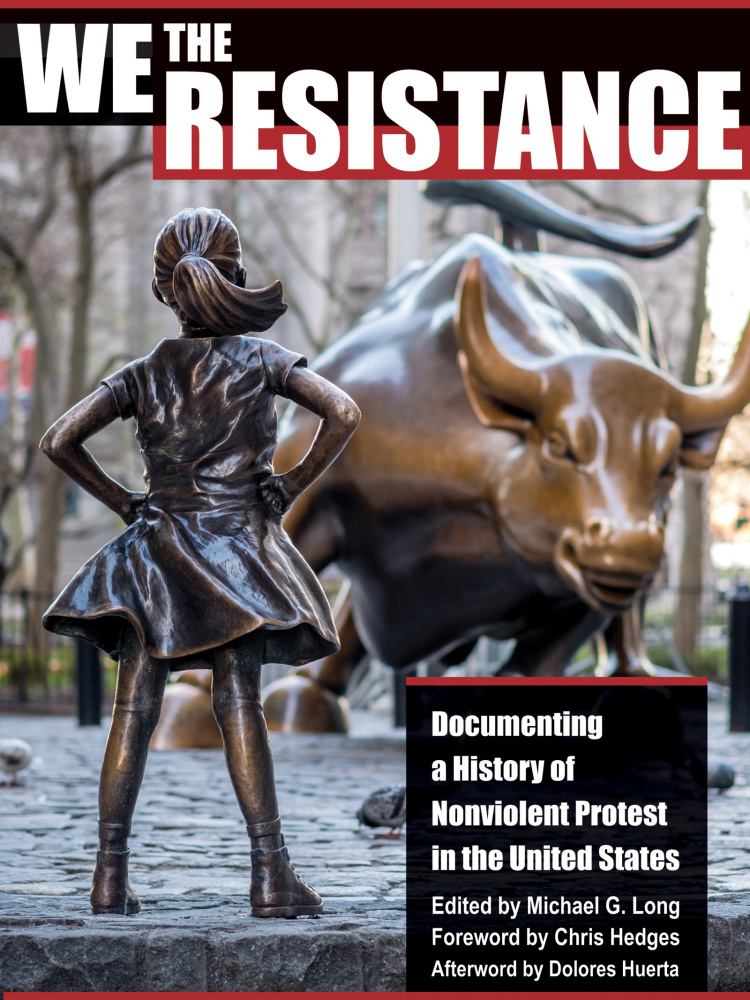
In the recent period, we have seen people taking to the streets in large numbers to protest police brutality and racial injustice. As a nation born in rebellion against unjust authority, and having codified the right to same in our First Amendment, there is a long history of such protest. Some of it is the stuff of legend as we recall the 1963 March on Washington, highlighted by Martin Luther King, Jr’s,. ‘I Have a Dream’ speech. What followed was new civil rights legislation and the biggest push toward racial equality in a century. Not all nonviolent protest is that successful. Depending up the leadership, messaging and objectives, such passion and desire can result in concrete actions or can be symbolic and yield few results. In the compendium of thought that Michael Long edited on the subject of nonviolent protest in the United States, ‘We the Resistance’, we learn much about the ways so many have used this approach to social action and change. The writings are powerful and revealing, as is this conversation with a man who can look at these movements and see if they have the makings of a special moment or a true movement.

EP 360 The Divided States of America

EP 360 The Divided States of America

Some might argue that James Madison was one of the most original thinkers among the founders. From his fertile mind came concepts like separation of powers, the encouragement of a marketplace of religious ideas and federalism. And while many focus on the contentious relationship of the executive and legislative branches of our government as one of his innovations most deserving of attention, our guest, Donald Kettl, says look again. Madison’s concept of federalism is the real flashpoint for our nation. Look no further than the recent coronavirus crisis to see the built in tensions between the federal government and the states. Is the federal government doing too much or too late? Are the states supposed to compete among themselves for resources or cooperate in pressing for a more aggressive federal response? In his book, ‘The Divided States of America: Why Federalism Doesn’t Work’, Professor Kettl says that Madison’s tactical construct in the moment, designed to avert the original 13 colonies from becoming a patchwork of discreet political enclaves, is not up for the job any longer. And to whom does he turn for strategic thinking that might be more appropriate for these times? None other than the newly re-emergent founder, Alexander Hamilton. His case is a clear and compelling one.

EP 359 Can We Do Diversity Without Inflaming the Culture Wars?

EP 359 Can We Do Diversity Without Inflaming the Culture Wars?

Get ready to hear something that strays from convention in so many ways. There’s a reason that Irshad Manji was the recipient of Oprah Winfrey’s first Chutzpah Award for boldness. She guides us in how to do the right thing in the face of fear and to retain our principles in the face of contentious disagreements in a diverse society. Call it taking the high road or leaning in to a more respectful approach to differences. Yet given that in the United States, discord has hit red alert levels, we have to find constructive approaches to our diverse beliefs and attitudes to keep this noble experiment in self governance going. In her book, ‘Don’t Label Me’, she offers so many thought provoking ways to consider what moral indigence does to our debates to weaken the hand of those who espouse the benefits of diversity. For example, she says that some who oppose diversity are bigots but some are skeptical of it because of how the champions of it practice it. Or she encourages patience because many aren’t opposed to the change they see in society, but rather by the pace of it. Further, lowering yourself to labeling and name calling gives your opponent the moral authority to do it to others. As I indicate in the early part of our conversation, I am white, male, heterosexual and older, so by the labels we tend to apply you might draw an impression of me that is at total variance with the way I think. Want to avoid that danger? Irshad gives you practical approaches in how to avoid labeling and create dialogue. Her thinking is original and urgent. You must hear her and read the book.

EP 358 Why is Daycare So Expensive–and Important?

EP 358 Why is Daycare So Expensive–and Important?

A demographer we recently did a podcast with reminded us that every child born from 1985 on is more valuable than those born before, due to the declining birth rate in America. When we stare into the eyes of a beautiful newborn baby in America, we are gazing upon nothing less than our future as a society. As young women today have many things to consider in their 20’s–starting a career, getting out of debt, finding a partner, buying the first home–and having a baby, perhaps, the baby piece is often the one that gets left to last or never done at all. And while many suggest that free public college tuition is an idea whose time has come, perhaps the true need is on the front end for government support of daycare. The less that stands in the way of a couple both working and having a family will grow in importance to society in the coming years. For that reason we have a freewheeling discussion with Florence Ann Romano, the Windy City Nanny, about this crucial subject. This presidential campaign is the first, I recall, where a First Five Years’ policy was seriously brought up for discussion. As the commodity, known as childcare, increases, along with its cost, you are destined to hear much more about it as an emerging issue in our society. That discussion starts here.

EP 357 Is America Prepared for a Presidential Election Crises

EP 357 Is America Prepared for a Presidential Election Crises

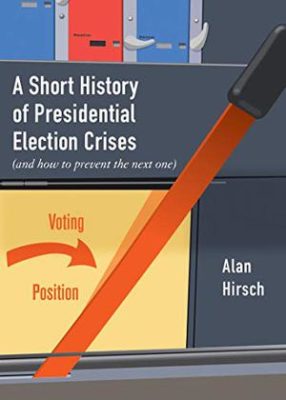
If history is a guide, the answer is no.  Even as far back as 1796, and a number of very close elections subsequently, we have seen where the perspicacious Founders of our country left us without a fruitful mechanism for deciding disputed presidential elections.  Just take the case of the 2000 election, with a time deadline looming, the U.S. Supreme Court was brought into the ‘chad’ fiasco, invoked the equal protection clause of the Constitution, but cautioned that its ruling in Bush v Gore should never be followed in the future.  Constitutional scholar, Alan Hirsch, addresses the history and offers solutions to it in his concise, yet dense, book, ‘A Short History of Presidential Crises(and how to prevent the next one’)’.  If 2016 is a guide, computer technology adds an additional dimension to this problem and more means for mayhem.  In his view, the Electoral College is an idea whose time has long since past and is a major contributor to the potential disruption in this process. The potential changes that may have to be instituted in the 2020 election owing to the recent pandemic are also discussed.  It’s a history of crises and a ringing of the alarm bell about what we continue to do which exacerbates the Founders initial flaw–and that is nothing.

EP 356 Why Do More Americans Find Costa Rica a Good Place to Move to?

EP 356 Why Do More Americans Find Costa Rica a Good Place to Move to?

Well, let me count the reasons: the sun, the beaches, the spirit of the people, the gentle breezes, the cost and the environment.  In many ways, it seems a place set apart from many of its neighbors and clearly from those of us in North America.  Maybe it’s, in part, because of the great messaging welcoming you there on HGTV or maybe it’s the curiosity surrounding a nation, bordered by potential threats, that disbanded its armed forces in 1948.  Who among us hasn’t heard that you can live like a queen or a king down there on your social security check?  Having been there recently on vacation, I was enchanted by the people and the place. So, I decided to explore what makes this place so attractive.  Our guide, and perhaps you’ve seen her on HGTV on a number of series is realtor extraordinaire, Rebecca Clower.  She owns Blue Water Properties and knows Costa Rica, its attributes and success story, as well as anyone.  As always, we ask a range of questions about the place so that if you’re pondering the move, you know what awaits you from one side of the country to the next.  Well with eleven micro-climates and many Costa Ricas all wrapped up in one place, you can make a mistake by not exploring its many facets.  The journey begins today on this podcast.

EP 355 The Death Penalty in America

EP 355 The Death Penalty in America

You didn’t know we still had one?  Without court injunctions delaying it, the Trump Department of Justice has been interested in reviving the practice using lethal injection.  In fact, President Trump has talked about extending its use to drug dealers in certain cases.  With about 70 people on death row in America for federal crimes, most of the executions still carried out in America are in the remaining states that have not abolished the ultimate penalty.  The practice is becoming rarer by the year, as the objections to it grow here and around the world.  I was focused on the federal death penalty when I began the conversation with Brooks Emmanuel, a legal counsel for The Justice Collaborative, but given his expertise and where the action is on this subject we moved to a broader conversation on the states’ use of it and regional disparities involved in its application.  It’s hard to address the topic without recognizing the racial implications over our history as well as the matter of wrongful convictions.  I was stunned to learn that this number is about ten percent.  You’ll appreciate his analogy pointing to how quickly this practice would be shut down, on that basis alone, if various historical factors were not at play.  This update will provide you with the information you need to consider your own sentiments as to whether this practice should be stricken from the books in America altogether and what the chances are that it will and how that might come about.  

Special Edition #8 A Spin Around the Globe with One of America’s Best Foreign Affairs Observers

Special Edition #8 A Spin Around the Globe with One of America’s Best Foreign Affairs Observers

David Ignatius borrows from the real world of international affairs to inform his wonderful spy novels and his fictional imaginings have even been used to train those in the espionage field. We are honored to close out our week of podcasts on international relations with him as we circle the globe exploring America’s changing role in it. His twice weekly column in the Washington Post is a must read for policy makers. His analysis is crisp, sharp and on point. We discuss the inspiration for his new book, ‘The Paladin’, as well as the threats to reporting on the world scene given the impact of social media and technological chicanery. Be ready to take in his views on a range of challenges for America in a world adrift.

EP 354 The Twilight of America’s Way of Empire

EP 354 The Twilight of America’s Way of Empire

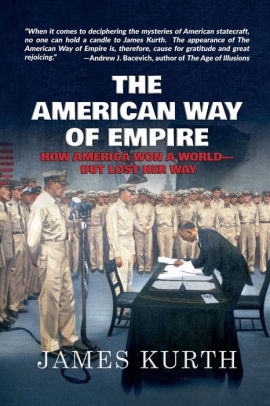
This is the second episode devoted to the dominant position America has played across the globe for nearly a century.  The truth of the matter it it is coming to an end.  Issues at home and abroad, as well as recent health and financial shocks, have made America attend to other matters and question whether its globalist ambitions, so much on display at the end of The Cold War, are sustainable.  The short answer is they are not.  In his book, ‘The American Way of Empire’, James Kurth says it’s time to recognize that elites in the country had a set of objectives calling for further involvement in an ideological, economic and military sense all around the world, that are no longer attainable.  Our domination of international organizations, our hegemonic system and spheres of influence in western Europe, Asia and other places is coming apart.  If history is a guide, great powers do not realize their re-positioning as one of, not the major power in the world until its upon them.  This, according to Kurth, is our moment.  It is in this period, however, where re-emerging powers, like China, Russia and, even, Iran will challenge our weakened position.  This could result in peaceful competition, arms races, dangerous crises and/or hot local hot wars or perhaps something we have yet to imagine.  A cyber attack of some enormity?  Let’s explore this important topic.

EP 353 America’s Soft Empire and Its Impact on the Developing World

EP 353 America’s Soft Empire and Its Impact on the Developing World

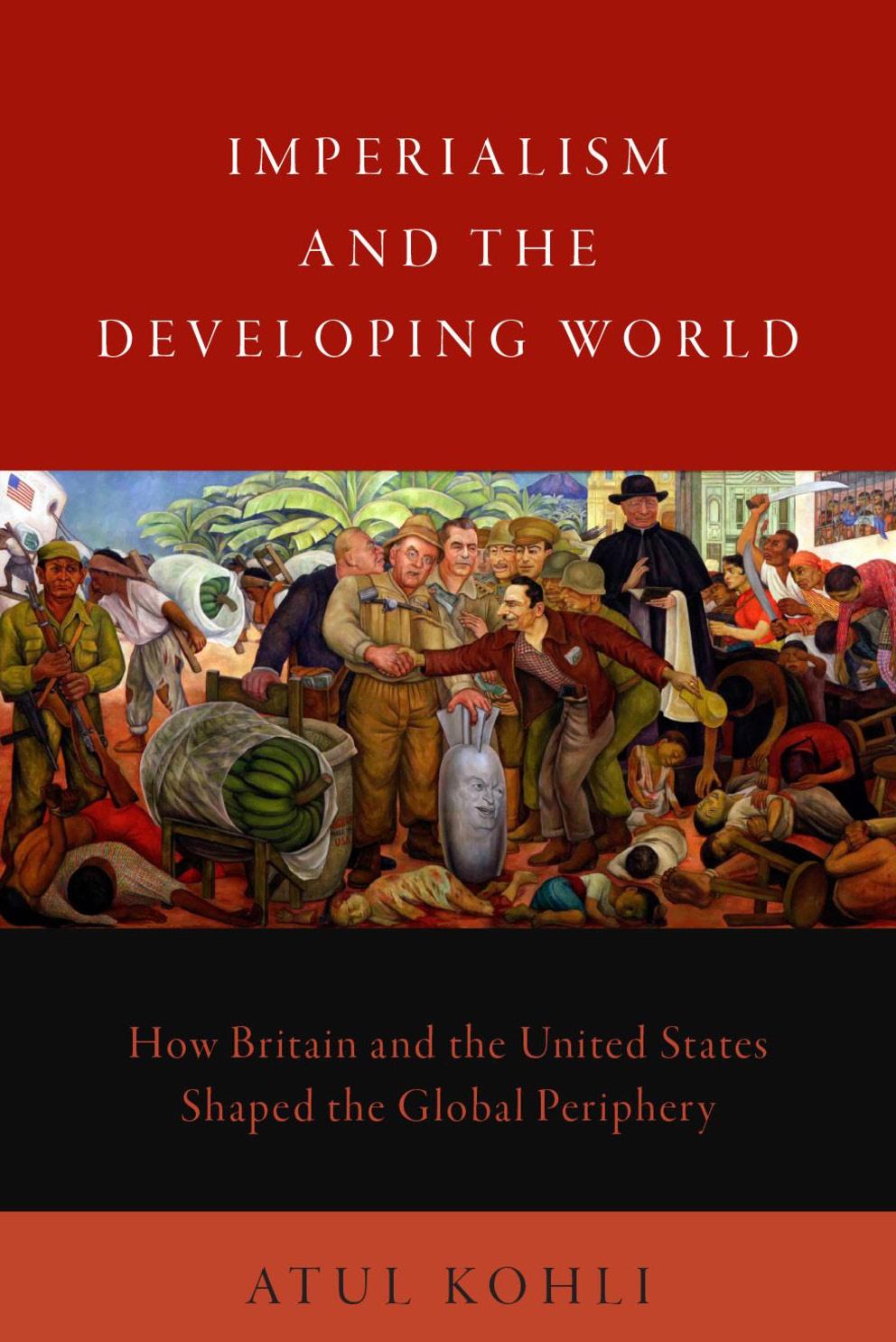
Empires of the past were pretty clear in their intent. They actually controlled the politics and the economy of the nations they colonized and put down their flag so there be no misunderstanding about their interests. In the modern era, following the Spanish Empire, the best example of that, of course, was the British Empire. Many may deny that America has picked up the mantle from Britain as a ‘soft empire’ but evidence of it certainly exists. The military and economic reach of America in the 20th century has all the trappings of it as we fanned out all across the globe. In another vernacular, we have been called’ the world’s policeman’. The debate about our role might best be framed in the context of whether the purposes for which we tried to dominate the world order were noble or for self interest, primarily economic. Atul Kohli, a professor of international affairs at Princeton University and author of ‘Imperialism and the Developing World’ focuses on the impact that we and Britain have had on countries in Asia, Africa, Latin America and the Middle East. We will make this projection of American influence the subject of this episode and our next one, as well.