EP 585 Public Opinion Regarding Abortion Becomes More Critical in Wake of Supreme Court Ruling
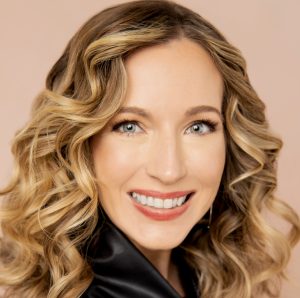 It is now said that Roe v. Wade is on the ballot. President Biden recently reiterated that sentiment saying that the future of abortion rights is now in the hands of the voting public. Abortion will remain legal in ‘blue states’ and banned altogether or largely in ‘red states’. The Congress, depending upon who controls it and who is in the White House, will be able to pass a law allowing for abortions nationwide or banning the practice. So the matter really is now a political one. To be able to frame the public’s perception of abortion, we thought it was important to look at the attitudes of the public on an issue that most people try to avoid discussing. We bring back on this podcast Tricia Bruce, PhD., from the McGrath Institute for Church Life at the University of Notre Dame. She was the lead researcher on a study done in 2019 titled “How Americans Understand Abortion.” Through in-depth interviews with people in red and blue states she found that the attitudes on abortion are more textured and more personal than has been described in our political discourse. How that all plays out politically is hard to say, but important to understand. Listen in and expect to be surprised.
Podcast: Play in new window | Download
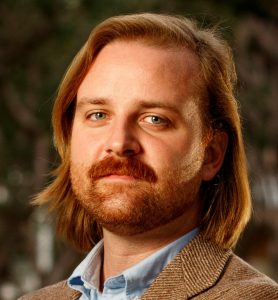 The answer is nothing really unless you are looking to enrich incumbent property owners, institutionalize segregation and contribute to sprawl. That’s according to our guest, M. Nolan Gray, author of “Arbitray Lines”. He’s a professional city planner and an expert in land-use regulation. And while there are plenty of reasons to plan for diverse, inviting communities, the use of zoning is not a great tool in that effort. In the cities, it often limits the robust, multi-purpose neighborhoods of old that had a mix of housing types, small businesses and recreation areas to make life fulfilling without a car. And in the suburbs, while at times it may have some applicability to health and safety concerns with wells and septic systems, often zoning is used to excluded different types of people from finding their home in these communities. This could include limits on young people, the elderly and minority. Our guest explains why zoning is not to be equated with city planning and that it is not the only kind of land use regulation. In fact, he argues for its abolition.
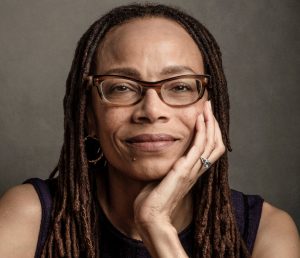 The child welfare system is, we are told, in place to protect children from abuse. In fact, the inordinate number of interventions in Black families suggests that the touted benevolence has turned into significant overreach tearing these families apart and thrusting children into a foster care system known to cause devastating harms. Often the crime these families have committed is not negligence or abuse but the sad fact of being poor in a nation whose safety net is far from adequate to address many of the needs that families and children have. Our guest, Dorothy Roberts, the George A. Weiss University Professor of Law and Sociology at the University of Pennsylvania has written a bold new book, “Torn Apart: How the Child Welfare System Destroys Black Families–And How Abolition Can Build a Safer World.” Professor Roberts is a respected and controversial figure as she calls for radical change. Some might call it taking apart the current system root and branch. Rather than providing protective services for children she has coined the term the ‘family policing system’ to better describe what is going on when there are now interventions of one sort or another in over fifty percent of Black families. So if we abolish the child welfare system, what will we replace it with? Find out on this podcast
 When we have dreams about what our future may hold for us, is there anything that limits the possibilities we imagine for ourselves? In this country, the American Dream holds out the promise of limitless choices for all. However, Janet Ruane and Karen Cerulo, our guests on this podcast, two sociologists and co-authors of ‘Dreams of a Lifetime’, have studied our conscious dreams, not those we have when we are are not awake, and they find that our imaginings are patterned in very specific ways and that our social circumstances affect the seemingly private and unique lives wrapped up in the stories we tell ourselves about what may await us if we have good fortune. Dreams differed depending on the person’s social class, racial group and gender. Age, too, was a major distinguishing characteristic. Dreams change throughout the years. It’s a whole new way about thinking about our mobility in our society. If you dare to dream, we are told, the journey holds great potential. Of course the flip side is what if you have difficulty thinking you deserve all that this life has to offer? We contemplate all of this on the podcast.
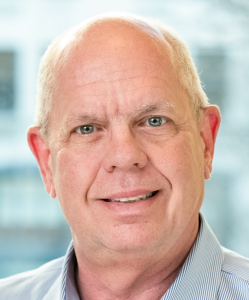 The Surgeon General of the United States, Dr. Vivek Murthy, has issued a new Advisory highlighting the urgent need to address the health worker burnout crisis across the country. Health workers, physicians, nurses, community and public health workers and others have faced systemic challenges in the health care system even before the COVID-19 pandemic, leading to crisis levels of burnout. Dr. Joe Parks, a psychiatrist and medical director, National Council for Mental Wellbeing, joins us to discuss this issue and many others affecting the mental health of all Americans, including a recent study by the National Council depicting the inadequate mental health services available to many Americans across the country. It’s a wide ranging discussion which includes the impact of the renewed focus on mental health included in the new gun safety legislation.
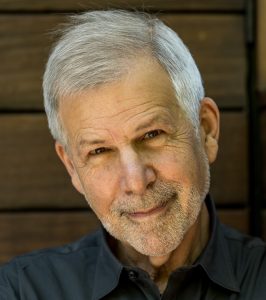 There have been two periods in American history when the Democratic Party was dominant for an extended time frame. One was the Age of Andrew Jackson, which began in 1828 and ended on the eve of the Civil War, and the other the Age of Roosevelt which began in 1932 and ended in the early 1970’s. Even the successes Democrats have had since the Age of Roosevelt, including the presidencies of Jimmy Carter, Bill Clinton, Barack Obama and now Joe Biden, has found the party in a stalemate with the Republican Party as the country turns to one or the other in rapid succession. According to our guest, Michael Kazin, of Georgetown University and author of ‘What It Took To Win: A History of the Democratic Party’, Democrats only win, with effect, when they embrace a form of moral capitalism which includes an economic message that lifts an interracial coalition of working- class people. That coalition has been harder to assemble since the Democratic Party, throwing off its racist past, truly embraced civil rights and lost many working- class whites, particularly in the South. As the oldest party in the history of democracy, the Democrats keep changing and look for new coalitions to embrace their more progressive policies. Will it work going forward? We discuss today on this podcast.
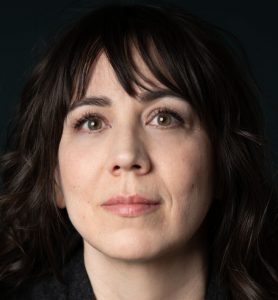 Let’s be honest, we all have biases. Often times they seep in unconsciously given the society into which we are born. The role of men and women, for instance, is societally reinforced by a host of cues, behaviors and modeling. Bias affects the individual who has to overcome someone else’s sense of who they are based upon the weight, height, skin color, gender or other factor irrespective of their unique qualities. While it can rob an individual of opportunity, it also can deny fields of talent, companies of ideas and cultures of progress by not recognizing the gifts a person can bring. Diversity training is the default mechanism for trying to help people unpack their prejudices, but it is in no way sufficient for the task of undoing unconscious bias. Jessica Nordell, author of “The End of Bias”, has been studying bias and its many manifestations for years and reminds us that there is a lot of work to be done and more creative approaches to the problem are being unlocked. The first element is accepting that biases of one kind or another reside in each of us.
 Not long ago, the technology industry was seen as a tonic for freedom and democracy. Not anymore. Every day, we see headlines blaze with reports of racist algorithms, data leaks and social media platforms fostering lies and hatred. Our guest, Jamie Susskind, has been called ‘one of the foremost thinkers on the transformative impact of the technology revolution’ by former British Prime Minister Tony Blair. His new book, “The Digital Republic” offers a roadmap as to what must be done to insure that the technologists who create these platforms and applications are held accountable for its impacts. That can be done with smart regulation which will turn this force from one driven by market individualism to one based on what he calls ‘digital republicanism’. He gives us a clear roadmap in the book and the discussion as to what we must do harness the industry for protection of the consumer, not the industry, as is currently the case.
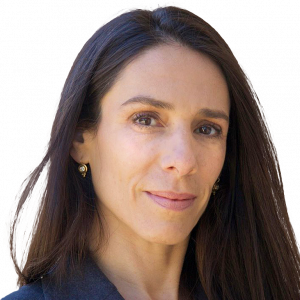 State Senator Doug Mastriano(R) recently romped to the GOP gubernatorial primary win in Pennsylvania. He opened his victory remarks by evoking Scripture, saying “God uses the foolish to confound the wise.” He then went on to cast the November election in vivid religious terms with another biblical reference ‘Let’s choose this day to serve the Lord.” And this is Pennsylvania, hardly the Bible Belt. Rep. Marjorie Taylor Greene has been speaking in these religious terms for some time, as has Ohio Republican candidate for the Senate, J.D. Vance, more recently as he proclaims his desire to smite pornography. Christian nationalism seeks to champion a fusion of American and Christian values, symbols and identity. Wait a minute, what happened to the establishment clause, that portion of the First Amendment that prevents the government from favoring one religion over another? I’m sure the same people say that they are strict Constitutional constructionists. Joining us today is Katherine Stewart, author of ‘The Power Worshipers: Inside the Dangerous Rise of Religious Nationalism.” Hold on for a freewheeling discussion of something once limited to the extremes of our politics that is