EP 687 Is America Fighting a Half-Hearted War on Poverty?
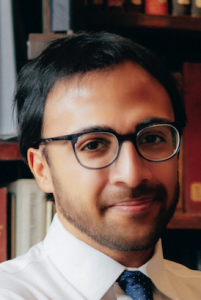 The richest nation in the history of the world can do better. Let’s be honest. Whether you live in a pocket of destitution, or just drive by it, don’t you get the sense that something is wrong if millions of people, urban and rural, live in the squalor that you can see, even just passing by? Nikhil Goyal, a sociologist and former U.S. Senate staffer dealing with these issues, took a deep dive into North Philadelphia’s Kensington neighborhood, and put his on the ground observations into his new book, “Live to See the Day: Coming of Age in American Poverty.” In it he profiles the chaotic lives of three young Puerto Rican boys who are by no means guaranteed an eighteenth birthday as a rite of passage. It feels more like a test of survival as they navigate the hypermasculine logic of the streets. And while Senator Tim Scott suggests the American Dream is now available to all, given his example, according to statistics his story is one of an outlier. In the Philadelphia we visit in this podcast, only one in 13 goes on to overcome the many impediments they started out life with. The lottery they lost from the get go is a real challenge to difficult for so many to overcome. We discuss possible answers to a problem which continues to vex America.
Podcast: Play in new window | Download
 According to our guest, there is a lost chapter of American foreign policy–the century following the Civil War in which the United States carved out a sphere of influence and became the only great power in modern history to achieve regional hegemony. The ways in which America achieved complete supremacy in the Americas was at turns reluctant and at other times ruthless. The historical significance of this neighborhood dominance later becomes America’s ability to project its might throughout the world. And while questions have arisen about how well we have done that, America’s peacekeeping role has been the dominant fixture in world stability since World War II. According to Sean Mirksi, author of “We May Dominate the World”, this history offers us a window into the trajectory that other regional powers–China, Russia and Iran–may take in the coming decades.
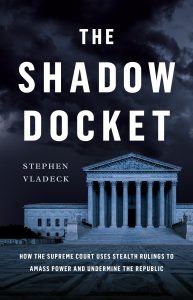 Every October we wait to see what cases the US Supreme Court will be taking on in the coming session. And every June we wait to see how they rendered their judgments. On today’s podcast, we tell you ‘the rest of the story.’ You see almost 99 percent of the court’s decisions take place on the shadow docket, a term that was coined by legal scholar William Baude in 2015 for those orders that are not subject to what he calls “the high standards of procedural regularity set by its merit cases.” The latter being the cases we think they are limiting themselves to accept in emergency cases, where a ruling is needed expeditiously to keep a possibly innocent person from a death sentence. Our guest, law professor Stephen Vladeck argues in his new book “The Shadow Docket: How the Supreme Court Uses Stealth Rulings to Amass Power and Undermine the Republic,” that this growing practice arose over the last century as a way to help judges address their growing caseload. Now it serves, in his mind, to make them more and more unaccountable to the American people.
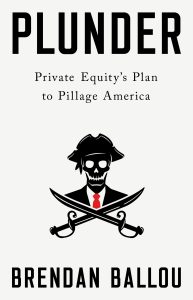 Private equity is a growing sector of investment financing in America where whole companies, not shares in them, are purchased with money from the principals in the private equity firms, as well as outside investors, while the rest is borrowed, often with the company being purchased assuming that debt liability while the investors cash in from the get go. It sounds like a get rich quick scheme and in many cases it is, as these companies, in many sectors of our economy are bought, hollowed out and re-sold in a short time span. Companies like Toys R Us, Sears and Sports Authority have fallen victim to the machinations of private equity. Here’s the kicker:today the industry owns more businesses than ALL those listed on US stock exchanges combined. It’s staggering. Private equity firms gobble up a trillion dollars in new businesses each year and engorge politicians with campaign money to keep them virtually unregulated. At some point, like S&L’s, investment banks and others who have gotten too high on the hog, something will have to give in this new behemoth in the ‘financialization’ of America. According to Attorney Brendan Ballou, author of “Plunder: Private Equity’s Plan to Pillage America”, ;private equity surrounds you’ as they buy up your veterinary clinic, your dentist’s office or your nursing home. It’s everywhere and we describe its workings today on this podcast.
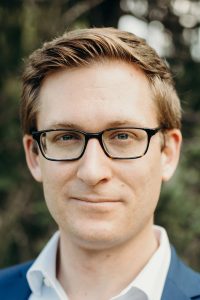
 As the wealthiest nation on earth, America should have made poverty a historical curiosity. Yet it is still with us and the wealth inequality gap continues to widen. As the major existential threat we face–climate change-is showing up everywhere in the form of floods, wildfires and intense hurricanes, some among us still doubt its existence and global consensus about what to do about remains elusive. So there you have it. Poverty and climate change. While we all aspire to create a better world, perhaps, what WE would have to give up to achieve it is beyond the level of sacrifice we are willing to pay. Do I want to pay more in taxes to help the other guy? Do I want to pay more for gas to drive my car if it pushes us to a cleaner future? Our guest, a respected professor of comparative democratic institutions at the University of Oxford(yes that one) has written a compelling new book entitled “Why Politics Fail” in which he describes why are collective goals–democracy, equality, solidarity, security, and prosperity–are undermined by what he calls ‘political traps.’ Our aims are altruistic, but our actions are governed by self-interest that undermines our ability to deliver on our collective goals. Think about it as you listen.
 Exclusionary zoning, practiced throughout most of the United States, is one of the most damaging forms of class discrimination. There is a racial component to it in many suburbs, but it really falls on a strata of society which is generally less educated and less affluent. Interestingly, liberal communities actually engage in the practice at higher rates than conservative ones. Call it a new and more subtle form of bias against those who have achieved less financial success. Its impact on educational outcomes, transportation problems and maintaining the yawning gap in income inequality in America is not well understood. And while there are reasons for minimum lot sizes, such as septic systems requiring land for their leach fields, in many towns the truth is the detached home on a large plot concept is meant to enhance property values and exclude those not welcome in various communities. In his book, “Excluded: How Snob Zoning, NIMBYism, and Class Bias Build the Walls We Don’t See,” Richard Kahlenberg does a great job of breaking down all of the issues at play as America maintains a legal, though harmful, form of discrimination. You’ll want to listen in.
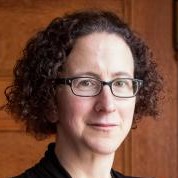 Have you talked to anyone lately who thinks that the system of health care we have now is working just fine? I didn’t think so. You may have coverage but your co-pays and deductibles are going up and up. You may be eligible for government help but you didn’t know you were and, therefore, didn’t sign up. Or you made it to a stage of life when you’re eligible for Medicare but you didn’t realize all the choices you have to make about your coverage and the fact that the average Medicare recipient is still paying $5,000 a year for services. And on top of all this you are imprisoned in a job because your employer provides your health care and going out on your own, even with the Affordable Care Act in effect, might not provide you with the same coverage. In total, our system is a mess and unlike anything in the rest of the industrialized world. This system of coverage and delivery does not need a new coat of paint. It needs to be re-built in full, according to Liran Einav and today’s guest, Amy Finkelstein, who co-authored the book, “We’ve Got You Covered: Rebooting American Health Care.” It will happen, but like all things political in America not without much time and energy and enough people finally coming together to say enough is enough. Change it. What with? Find out today on this podcast.
 There are things that still seem unimaginable even in the political chaos of our times as women’s rights are being stripped away and historical content taught in schools is being tightened so as not to ‘offend’ students. One of those to my mind is the push in a number of states to ease restrictions on child labor. It’s hard to imagine that we want to revisit the images seared in our minds by Upton Sinclair in his novel “The Jungle” which exposed the appalling and unsanitary conditions in the meat-packing industry at the turn of the 20th century and place young people in that circumstance again. Mind you there are stories of the two 10-year old children found to have worked unpaid shifts at a Kentucky McDonald’s and unaccompanied migrant children cleaning up remains at a meat packing plant in the US, as well as an increase in federal child law violations, but what we discuss more directly in this podcast is the growing movement in state legislatures to ease restrictions on child labor because of worker shortages. Backed by business groups, this push is to lift limits on hours worked, types of work performed and the ages of those involved in states like Arkansas, Tennessee and Minnesota, among others. It’s a trend that must be monitored to ensure that we do not backslide to a place we have not been in this country for more than a century. Elisabeth Jacobs, a Senior Fellow at the Urban Institute and co-author of “Moving the Needle: What Tight Labor Markets Do for the Poor”, joins us to discuss.
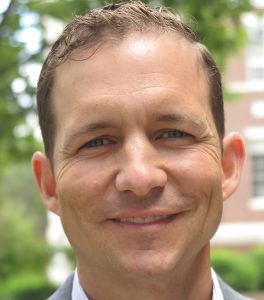 The answer to our title for this podcast episode is no, but…many fewer people identify as Christians today than in the late 20th century and whether it be frustration with scandals in the Catholic Church, the politicizing of many Protestant sects or the pandemic, the pews just are not as full as in the past. As most things are there is nuance and complexity to this story. For example, mainstream Protestantism is falling on hard lines while some evangelical churches are thriving in different regions of the country. And many new arrivals from Central America are bringing new parishioners and vibrancy to the Catholic Church and Protestant evangelical groups in some regions of the country, but there is also great opposition to immigrants by many white Protestants. Joseph Slaughter a historian and assistant professor of religion at Wesleyan University in Connecticut, attempts to walk us through the complexity of the marketplace of religion in our country. He reminds us that formal religion has been viewed as in death throes before and rebounded. Can it in an era when a growing number of young people come from families of mixed faiths who have not really been born into a singular faith tradition? We’ll discuss it all on this podcast.
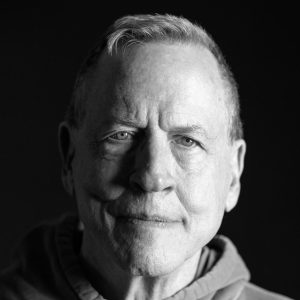 If there was ever a political leader who understood the moment, American history would point to FDR. Having been elected with America on its economic back from the Great Depression, he was masterful in instilling confidence in the people about their futures and in developing new government programs which, he said, would have been successful in his mind if 60 percent of them worked. Not only did many of them work, but it his notion of a more active federal government with which we live today. And while attempts have been made to curtail some activities, it is hard to see how his trajectory is not still our guide. At the same time as he was trying to modernize and innovate in domestic policy, he was also forced to spur a recalcitrant American public in preparing to assist and join the war developing in Europe. It was the merge of the two-domestic and foreign-which is the focus of Craig Nelson’s new book, “V is for Victory: Franklin Roosevelt’s American Revolution and the Triumph of World War II.” He needed America up and running if he was going to re-build our mothballed armed forces after World War I and make us the world’s most formidable economic and military force ever since that time. Given that his legacy is still so predominant in our political culture we wanted to revisit how the nation we are today really came about.