EP 701 Whitelash in the Wake of Obama Presidency Part of Historical Tug of War
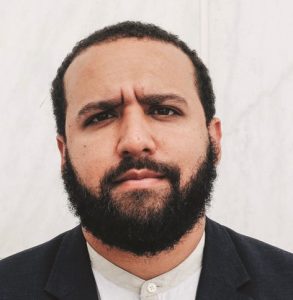
As a diverse group of people in America celebrated the progress represented by the ascension of Barack Obama to the presidency, others, predominantly white, used it as a pretense to produce a new and fearsome wave of white backlash–a whitelash. Emerging in the moment, coupled with news that America would be a majority-minority country in a few decades, were two diametrically opposed racial movements. The first was the longstanding nativist movement of white Americans that questioned the validity of the president’s citizenship, his Christian faith, and his fidelity to America. The second was Black Lives Matter, the latest incarnation of a century-long movement for black humanity, which arose from the frustration with the limitations of a black president and the “black faces in high places” politics that took hold in the decades after the civil rights movement. Meanwhile, the post-Obama era prompted the resurgence of a third movement: white supremacy enforced by any means necessary–the number one threat today according to the FBI. It’s all part of pulling on the rope which has gone on throughout American history. Some progress is made in making America a multi-racial democracy and this is followed by resistance to it. Joining us to give context to what we are seeing is Pulitzer Prize-winning journalist, Wesley Lowery, author of “American Whitelash: A Changing Nation and the Cost of Progress.”
Podcast: Play in new window | Download

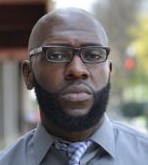 There has been much in the news about student loan debt in America, as well there should. Not only are those long lingering debts approaching 2 trillion dollars, but the effect radiates out to the whole society. For the individual clearly it can lead to stress and anxiety, affect career choices and limit flexibility. In a larger sense it often turns personal decisions into societal concerns. If family is the foundation of our economic system, built on buying homes, hard goods and starting a family each of these decisions must account for the debt that must be repaid. Along with issues of intimacy, finances are the key driver of marital strife. The question may well be asked, even before marriage, about the student loan debt one or both partners have–or it may be shirked and that lack of transparency creates problems down the road. This is all to say that President Biden’s plan, overruled by the U.S. Supreme Court, and replaced by a process of ‘negotiated rule making’ to ease the burden on certain payees is a big issue for many. To discuss the implications with us is Darren Moore, Ph.D., a licensed Marriage and Family Therapist and clinical professor. It’s an important conversation.
 Nat Glover, our guest today, is a man who has seen a lot in his lifetime. His book “Striving for Justice: A Black Sheriff in the Deep South” describes how he embarked on a career in law enforcement which led to his becoming the first Black sheriff in Jacksonville and the state of Florida in over 100 years. He was seen by then President Bill Clinton as one of the most innovative and highly regarding law enforcement officials in the country, pioneering the concept of community policing, banning choke holds and working with officers on de-escalation training when dealing with mentally challenged individuals. He later went on to become President of Florida’s oldest Historically Black College and University, the Edward Waters University. Given that his interest in justice began as he was attacked by KKK members in 1960 wielding ax handles, he brings a unique perspective to issues of police reform, affirmative action, reparations and push back against the teaching of courses on slavery and race in our schools.
 Paul Ehrlich’s warnings about a population bomb never really took hold, but America and the rest of the world has lived with an expectation that the human species will continue to grow. In the next several decades, there’s every indication that, here in America, and elsewhere in the world, that will not be the case. And while our guest urban policy expert Allan Mallach, author of “Smaller Cities in a Shrinking World: Learning to Thrive Without Growth,” lays out the various reasons that the global population, in general, is on a downward population trajectory, he then zeroes in on cities of a certain size here and abroad and the implications of that reality, which even ‘pro-naturalist’ policies will not be able to reverse. And given that we have always equated population growth with economic growth, he tries to adjust our thinking to suggest that there are new possibilities in something he called ‘networked localism’ to change that thinking and decouple those assumptions. He makes a compelling case for where cities are headed in the period ahead and the adjustments that will be required to thrive with fewer residents.
 Native American history is often made to seem a sidebar in the American story when, in fact, it has been central to the development of the nation and played a key role at seminal moments throughout the centuries, including the present day. The long practice of ignoring Indigenous history is changing, however, with a new generation of scholars insisting that any full American history must address the struggle, survival, and resurgence of American Indian nations. And we are trending hopeful in this regard according to Yale History and American Studies Professor, Ned Blackhawk, who has written “The Rediscovery of America: Native Peoples and the Unmaking of U.S. History.” He walks us through our history as a nation, placing the Native American experience in its fullest context and shares his informed belief that this period of self determination is sparking advocacy and activism in Native American communities across the land. Finally they, and their contributions, are emerging from historical neglect in their full complexity.
 The Reuters Institute has published a study indicating that TikTok influencers and celebrities are increasingly taking over from journalists as the main source of news for young people. What started out as a hobby for many in the 2010’s when the recession hit many job sectors hard has become a a dollar soaked industry for some who can use their authentic voice to attract followers awaiting their next post, picture or video to tell them how to dress, shop, interact or think. While most people in this industry do not make the big bucks, just as in the podcasting world, a few have become cash cows for marketers who give them product to promote or lavish substantial endorsement deals on them. The cost of entry to attempt to make your mark is low and can lead some influencers to enjoy success on stage, film and in high-end ad campaigns. Our guest, Emily Hund, has written “The Influencer Industry: The Quest for Authenticity on Social Media.” We explore this growing sector and its impact on us as individuals and our society.
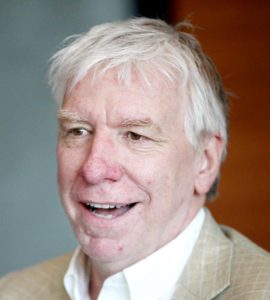 The future of car design is no longer in the hands of car companies as technology has become the biggest driver behind new car models. Major trends in cars clearly point to a future when the buzzwords will be electric, somewhat autonomous, connected, safe and sleek. And they may look nothing like they do today. The evolution of the car from an emblem of freedom and open skies to a more practical application, according to research, began in the mid 90’s. The dream of a sports car was eclipsed by what was considered a safe, utilitarian SUV, though, in truth, bigger does not mean safer. Our guest, Jack Hitt, while writing on a range of subjects for many publications, has contributed to the thinking about the future of the automobile with pieces in the New York Times Magazine and other publications. In this conversation, he answers questions about all kinds of developments in cars–those that fly, drive themselves and are powered by electricity. He even lets us in on what might be happening with the most talked about, but never revealed, secret in the car industry. Is Apple going to disrupt the marketplace as it did with music and phones? Find out today on this podcast.
 Over 40,000 Americans die each year due to gun violence. And while a person pulls the trigger, there is no doubt that the weapon, guns of all sort, make the effect and lethality of violent exchanges so much more costly. That’s one of the many myths that Dr. Thomas Gabor and Fred Guttenberg dispel in their book “American Carnage: Shattering the Myths That Fuel Gun Violence.” It is an evidence-based attack on old bromides, legends and half truths put forward by the gun industry to convince you, for example, that ‘an armed society is a polite society.’ If that were the case, America would not have meted out such cruel punishment to so many families as we commit a third of all the gun-related murders in the world, even though we only have 5 percent of the world’s population. One by one the authors address the issues of the impact of gun legislation, the role mental health issues play and how we begin to address the issue when the society is already awash in guns. If your gut tells you something must be done, but when you enter into a discussion with a person who defends our current practices you’re at a loss to push back, arm yourself with the facts today on this podcast.
 Broadcast television from the infancy of the medium well into the late 1960’s dominated the landscape and the news the average American saw. Over the next three decades, thanks in good measure to Richard Nixon’s antipathy toward his portrayal on television, cable television was given the opportunity to grow and evolve into a powerful entertainment and news force in the country. The problem has become how much the two have intersected eventually leading to an eminently watchable,though unreliable, source in services like Fox News. It became the most disruptive force in modern American politics, as a twin to conservative talk radio. The fascinating and little reported history of cable television, first as a retransmitter of broadcast television, and then as a programming juggernaut with services like HBO, ESPN, MTV, CNN, and C-Span. At this moment when cable’s narrowcasting has provided a roadmap for digital broadband streaming, which is resulting in cord cutting that will effectively end cable as we know it, it is a good time to revisit that history to understand where we are headed. To ably do that is Kathryn Cramer Brownell, an associate professor of history at Purdue University, and author of “24/7 Politics: Cable Television and the Fragmenting of America from Watergate to Fox News.”