EP 741 Are We Now in the Midst of a Second Cold War?
 America has more than a rooting interest in wars taking place in places like Ukraine, Gaza and elsewhere around the globe. If we go back to the fall of the Iron Curtain and the dissolution of the Soviet Union in the late 1980’s, we were led to believe it was the ‘end of history’ and that our ideas about a liberal democratic political framework and a capitalist economic system had prevailed and the rest of the world would do well to emulate us. Yet, by virtue of a world in conflict, it seems as if that message was not received in the way we had hoped. The big question is: did America overplay its hand when we strode across the globe as the only superpower? Could we have embraced a different framework, one our guest calls ‘charter internationalism’ more fundamentally than an adherence to ‘liberal internationalism’? In his compelling book “The Lost Peace: How the West Failed to Prevent a Second Cold War,” Richard Sakwa explains how America erred in wanting other powers, most importantly China and Russia, to adopt our governing philosophy when it would have been more advantageous to have them simply accept a rules based order. How this overreach played out is the source of much of the turmoil we see today and the basis for his book and our discussion.
Podcast: Play in new window | Download
 Just because humans stride atop the animal kingdom doesn’t mean that what affects us doesn’t affect other species on this earth or that the impact on them by things like climate breakdown doesn’t turn around and affect our lives. Naturalist Adam Welz tries and succeeds in driving this point home in his book, “The End of Eden,” which stands as a stark warning about the “intimate ecological breakdowns” which imperil all of life of Earth. And while we can design technologies and mitigate the consequences of our actions, flora and fauna remain helpless in the face of a rapidly deteriorating climate crisis. Let’s take for instance the issue of heat. While he reminds us we do not see birds falling out of the sky, if you keep your eyes open you will see many bird species pausing for much longer periods in the shade to regather their strength. Or you might live in Maine and notice that the ticks that would go south for the winter are now able to stay in the north longer and have harmful impacts on the moose population. And so it goes. Perhaps an appreciation for the impacts of climate ‘weirding’, as he calls it, on overlooked species might capture the imagination of many who tend to look away otherwise.
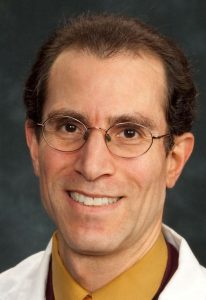 When a gorgeous Poli theater was restored in my hometown about a decade ago, one of the changes that had to occur was making the seats larger, because since the early 20th century Americans have gotten heftier. Along with this collective weight gain, thanks to processed foods and more sedentary work lives, has come an assortment of maladies including diabetes, heart conditions and strokes. And while the general toolkit we had to address the obesity crisis consisted of better diet and exercise, or barbaric surgery later on, that wasn’t enough to really move the needle. And then along came drugs like Ozempic and the ‘off label’ prescribing of this diabetes medication for weight loss, Wegovy, specifically for weight loss, and others now in early stage use and development and it seems like many people we all know are injecting these drugs and finding that they are losing 15 percent of their weight in the process. Now, hold on. When something sounds too good to be true…so what is the story with these drugs? How long do you have to stay on them? What are the side effects? Are they safe for childhood obesity? We’ll discuss all this today with Dr. Richard Siegel, co-director of the Diabetes and Lipid Center and a doctor at the Weight Loss and Wellness Center at Tufts Medical Center and an associate professor at the Tufts School of Medicine.
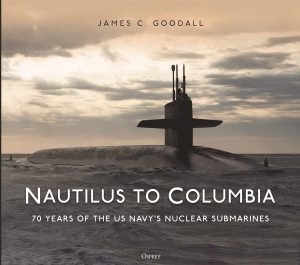 As a Connecticut resident, it’s hard not to be aware of the storied history of Hiram Rickover, the “Father of the Nuclear Navy” and the development and commissioning of the first nuclear submarine in in 1952 at the Groton, Connecticut. Now with a fleet of over 220 boats, or ships as they came to be called, America’s superiority in this realm cannot be overstated. This ‘silent service’ patrols the world’s oceans, un- detectable to adverseries, who are nonetheless aware of the powerful capabilities they hold and the payloads they carry. The nuclear propulsion allows these ships to stay underwater, literally, for months at a time. Prior to using nuclear generated power, submarines had to rise to the surface on a daily basis. America has maintained its nuclear sub superiority for many decades now and shows no sign of giving it up, which presents great challenges to any country trying to engage with us. James Goodall, our guest, has penned 29 books and his latest, “Nautilus to Columbia: 70 Years of the US Navy’s Nuclear Submarines” is a remarkable pictorial of the history of one of the most successful military programs developed in the history of warfare. Stay to hear what he says about the role they might play if China, as it indicates, tries to take back Taiwan by force.
 The current approach to water management is failing to meet the demands of the growing human population and the severe challenges brought on by climate change. Our guest, David Sedlak, director of the Berkeley Water Center and author of “Water for All: Global Solutions for a Changing Climate” argues that there are solutions to address these water shortages around the globe, but they differ from region to region and call for different technological and policy solutions. He believes that America, and its built out water infrastructure, is too married to the dams, pipes and systems we built well over a hundred years ago. He shares with us the creative responses to both our reservoirs above ground and aquifers below ground. The work going on is extensive and he describes the emerging technologies in desalination to innovations for recycling wastewater and capturing more of the water that falls on fields and cities. He even describes the in building efforts that may make our use of water in homes net zero in the future. I found the discussion enlightening and the engineering going on extraordinary.
 When Hurricane Ian devastated Florida in 2022, two-thirds of the people who died were older adults. Similarly, the greatest number of fatalities during Hurricane Katrina, the California Camp Fire and the winter power outages in Texas were among the same population. And when you stop to think about it, it makes sense. Many older Americans have chronic conditions that make them more susceptible to extremes and their options in terms of housing and transportation are key factors, as well. After all, the vast majority of older Americans live in their own homes, which often met their needs in an earlier phase of life, but not now. And, then, of course, there’s the issue of social isolation which means many seniors are on their own in emergency situations. All these factors, along with solutions, are included in Danielle Arigoni’s book, “Climate Resilience for an Aging Nation.” As she points out strikingly, in this podcast, our climate changes are on a collision course with our demographic trends in an ever aging America.
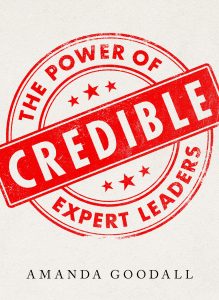 Our guest today has a basic rule, based on research, about leaders of businesses and organizations. They should, first and foremost, be experts in the activity they lead and then acquire and assume the leadership skills required to run the operation. In too many cases, as has been the trajectory since the 1980’s, more and more chief executives come with MBA’s, yet no practical experience in the widgets or services being created, or crossover from manufacturing, say, cars to then being hired to run a bank. And, according to research, the results with experts are far better by many measurements–happy and productive workforce, focus on the mission and the bottom line. Perhaps, most important is the long view, not just quarterly results, that expert leaders take when committed to the products or services they provide, is key to their success. Amanda Goodall, a business school professor at the University of London, and author of “Credible: The Power of Expert Leaders” is our guest today.
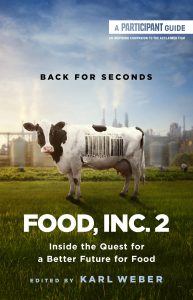 America’s food system is broken, bringing harm to family farmers, workers, the environment and our health. But it doesn’t have to be that way and the new documentary and companion book “Food, Inc. 2” provides plenty of approaches to reclaiming a more natural and sustainable way to feed America. It’s all a follow on to the highly acclaimed and impactful documentary project, “Food, Inc.” which got Americans attention back in 2008. It posed penetrating questions about food processing, agribusiness, affordability, and the nutritional content of our food system. “Food, Inc. 2” picks up the story to see what changes have occurred in this span of time. There is good news like advances in lab-grown meat to better treatment of food workers of all types in the wake of the pandemic to a growing food-sovereignty movement–yet the industrialized food system we’ve built, call it Big Food, clearly remains dominant, crowding out the concept of family farming as a rule. Joining us to discuss the sequel is Karl Weber, editor of the companion book.
 There is a war raging below the surface, literally, for the critical minerals–lithium, copper, cobalt and that packet called ‘rare earth’–needed to power the conversion from fossil fuels to electrification of our lives. To build electric cars, solar panels, cell phones and millions of other devices will require the world to dig more mines to extract these vital building blocks for lithium-ion batteries which power so much of our technological needs now. That need will grow exponentially in the years ahead. Paradoxically, that which is designed to create a cleaner, greener world can start with the messy and dirty extraction process of these vital minerals. China is well ahead in this competition to fight climate change and power crucial technologies. America has some difficult choices to make, lest it become reliant on wobbly supply chains to provide these essentials. Will this become a national security issue in the not too distant future? We discuss all of the implications on this podcast with Ernest Scheyder, the author of “The War Below: Lithium, Copper, and the Global Battle to Power Our Lives.”