EP 878 Why America’s Love Affair with Lawns Offers Little Value to the Environment
 Americans spend endless hours growing, tending, and cutting their lawns. In fact, 40 million acres of land in the United States is covered by turf grass, making it the most irrigated crop in the country. To what end? It has virtually no value to flora and fauna and there are so many other ways to make your yard an oasis for the birds, bees, wildlife, flowers and trees. As we all wonder what we can do to help with the threats to biodiversity today and ameliorate the effects of global warming, the best thing to do is start in your own backyard. In her beautifully designed book “Grass Isn’t Greener: The Everyday Conservationist’s Guide to Bringing Nature to Your Yard,” Danae Wolfe, a conservation educator and skilled photographer, illustrates her cogent points page after page and picture after picture. We discuss creating spaces to support wildlife and the natural world without leaving home.
Podcast: Play in new window | Download
 When Roe v. Wade was overturned by the U.S. Supreme Court in 2022 in the Dobbs. vs. Jackson Women’s Health Organization case, it was the decision that anti-abortion activists had been waiting to see for over 50 years. While the decision did not ban abortions nationwide, it did throw the matter back to the states. Some states had trigger laws at the ready which would activate anti-abortion legislation once such a ruling came down. Other states, which were pro-choice, got busy as well in trying to protect and expand women’s reproductive rights in various ways, including many which would help make it easier for women in the anti-abortion states to have the procedure in their state. Donors and providers also got to work, as the former have given pro-choice groups new resources and the latter became very creative in how they expanded their services. David Cohen and our guest, Carole Joffe, have co-authored a book called “After Dobbs: How the Supreme Court Ended Roe but Not Abortion.” The book contains stories of people on the front line of this ongoing battle for abortion-related care. Carole reveals an amazing fact about the number of abortions in America since the decision came down. Stay tuned for that.
 States, one by one, began legalizing marijuana, back in 2012 with Colorado leading the way. It was sold to the public as a way to unclog the criminal justice system, bring tax revenue and strong regulation, which would ensure quality. In truth the record shows that illegal shops have grown in number even in states with legal shops. Take New York state. In New York City itself there are 140 legal shops and 8,000 unlicensed dealers who can undercut the price of the product and for which no tax revenue is collected. And to add to the story of unintended consequences, in general today’s marijuana often exceeds 20 percent THC content compared to 3-5 percent in the pot of the 1990’s. Given that the legalization has resulted in former light users becoming daily users, the health consequences can only be bad. It may take years, but one day there will be a reckoning like we have seen with tobacco. Joining us to discuss all things marijuana and its new place in American society is Keith Humphreys a professor at Stanford University who specializes in drug policy.
 These are tricky waters to navigate, but two scholars, Jessi Streib and Betsy Leondar-Wright, have co-authored a book called “Is It Racist? Is It Sexist?: Why Red and Blue White People Disagree, and How to Decide in the Gray Areas,” wade through it in their new book. It’s based on interviews with 125 white interviewees from many parts of the country and the result is a new way of understanding how inequalities persist by focusing on the individual judgment calls that lead us to decide what’s racist, what’s sexist, and what’s not. While they found a tendency to describe some people as ‘convictors’ and others as ‘acquitters’, as in a jury setting, they offer a very interesting metaphor of being more of a surveyor in determining what a set of facts, put in context, may tell us about situations we can all imagine happening, but may come to different conclusions as to ‘why.’ Our guest, Betsy Leondar-Wright, was somewhat heartened in this exploration to find that few people harbored explicit racial hostility toward people of color, but perceptions about the role of our history and that which is embedded in our institutions may not always rise to the surface when contemplating how certain actions toward ‘others’ occur.
 High in the Arctic, myth is melting into reality: as temperatures rise, newly ice-free waters are turning the Northwest Passage from a fable into navigable waterways. And while global superpowers, like America, Russia and China, see great economic benefit in finding a northern route that can act as a new superhighway for goods to equal the Panama and Suez Canals, at the same time we are losing sight of the real impacts on Arctic peoples, wildlife, and ecosystems. Global warming is ravaging the Arctic-and threatening the planet’s stability-while we jockey for position for control of emerging waterways. Kieran Mulvaney explores all of these issues in his great new book, “Arctic Passages: Ice, Exploration, and the Battle for Power at the Top of the World.” He is our guest today and, yes, we talk about President Trump’s Greenland fascination as well as the best tourist option for getting close to polar bears.
 Congress authorized the Justice Department to conduct civil investigations into constitutional abuses by police, such as excessive force or racially motivated policing back in 1994 as a response to the beating of Rodney King, a Black man, by white Los Angeles police officers. And in the wake of the George Floyd killing at the hands of police in Minneapolis, new federal legislation was contemplated, but never passed, and the Justice Department launched 12 ‘pattern and practice’ investigations into police departments scattered across the country. The Biden Administration’s Justice Department, under Merrick Garland, was slow, however, to enter into court-binding consent decrees that would be binding now. The Trump Justice Department has no interest in pursuing these cases and, in fact, about 100 lawyers in the civil rights division have quit because of the direction of their unit and the Department. So, basically, police reform in America is dead in this moment. To discuss the state of affairs is Jim Mulvaney, an adjunct professor in the Law and Police Science Department at John Jay College of Criminal Justice.
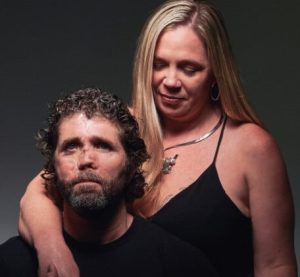 Marriages are a 50/50 proposition in America as to whether they can survive all of the challenges couples go through. For a Navy Seal, the divorce rate is closer to ninety percent. Today, on the podcast, we talk to a remarkable SEAL couple, Jason and Erica Redman, who have written the book “Mission: Invincible Marriage: A Battle-Tested Guide to an Enduring Relationship.” When you hear their story of his heroism, involving serious injuries suffered in Iraq, requiring upwards of 30 surgeries, and her sacrifices on the home front, it will remind you that the vows ‘in sickness and in health’ do really test married couples throughout a lifetime of change, tough times and new challenges throughout. You’ll learn more about them in this podcast, but you will also ask yourself what you can do to strengthen your relationship. In their view, it all starts with friendship. Take a listen and get prepared to be inspired
 While the need for strong, loving partnerships may be more necessary than ever in this complicated moment, the truth is fewer young people are even dating as other generations have done in the past, let alone marrying in their 20’s or having families. Our guest, Aleeza Ben Shalom, host of the series, “Jewish Matchmaking” on Netflix and author of the new book, “Matchmaker Matchmaker” has some great perspective on what is happening to love, dating and marriage and freely offers wisdom about how you can be sure the person you are involved with is the right one for you. While youth romance is in decline in America, many are still looking for love and Aleeza offers some novel approaches like no touch for the first five dates and date ’em until you hate ’em. It’s a fun conversation that touches on societal trends in this important aspect of life, as well as personal advice you will find useful as you’re searching for the right partner.
 Call centers are the hub of much activity these days as customers seek information or wish to buy things. Their role has changed over the years and the sophistication of the technology they use, the demands on them to streamline and cost cut with AI, and the supervisor ‘surveillance’ which measures their minute- by- minute activities, make the job more stressful than you might imagine. And while we, the customer or consumer, are frustrated by the requests to take everything on- line or do a ‘chat’ with an AI bot, the humans at the end of the line have their own concerns. In her book “Disconnected: Call Center Workers Fight for Good Jobs in the Digital Age”, author, labor researcher and organizer Debbie J. Goldman, Ph.D., describes the hard-fought battles of call center workers-one of the largest, yet most overlooked, labor forces in the U.S., even though it is the work home to over 4 million people in the country.
 Isn’t it great when you deal with a company where the principal is the owner who will take full responsibility for the actions of the company’s employees? How rare is that? Well, according to our guest, it is getting rarer by the day as systems are built to insulate humans from ever having to claim direct responsibility for any of the indignities you may face in your dealing with companies and politicians. Dan Davies, author of “The Unaccountability Machine: Why Big Systems Make Terrible Decisions and How the World Lost Its Mind,” describes how human decision-making has often been replaced by a literal algorithm and it has allowed us to have crime without criminals. No one, for example, went to prison following the financial meltdown in 2009 because we replaced individual responsibility with ‘criminogenic organizations’ designed to ensure that crimes would be committed, and no one would pay the price. Private equity deal-making, which we have reported on previously, offers guilt free destruction of whole industries. Impress your friends when you explain to them what an ‘accountability sink’ is after listening to this podcast.