EP 145 Saudi, Inc.
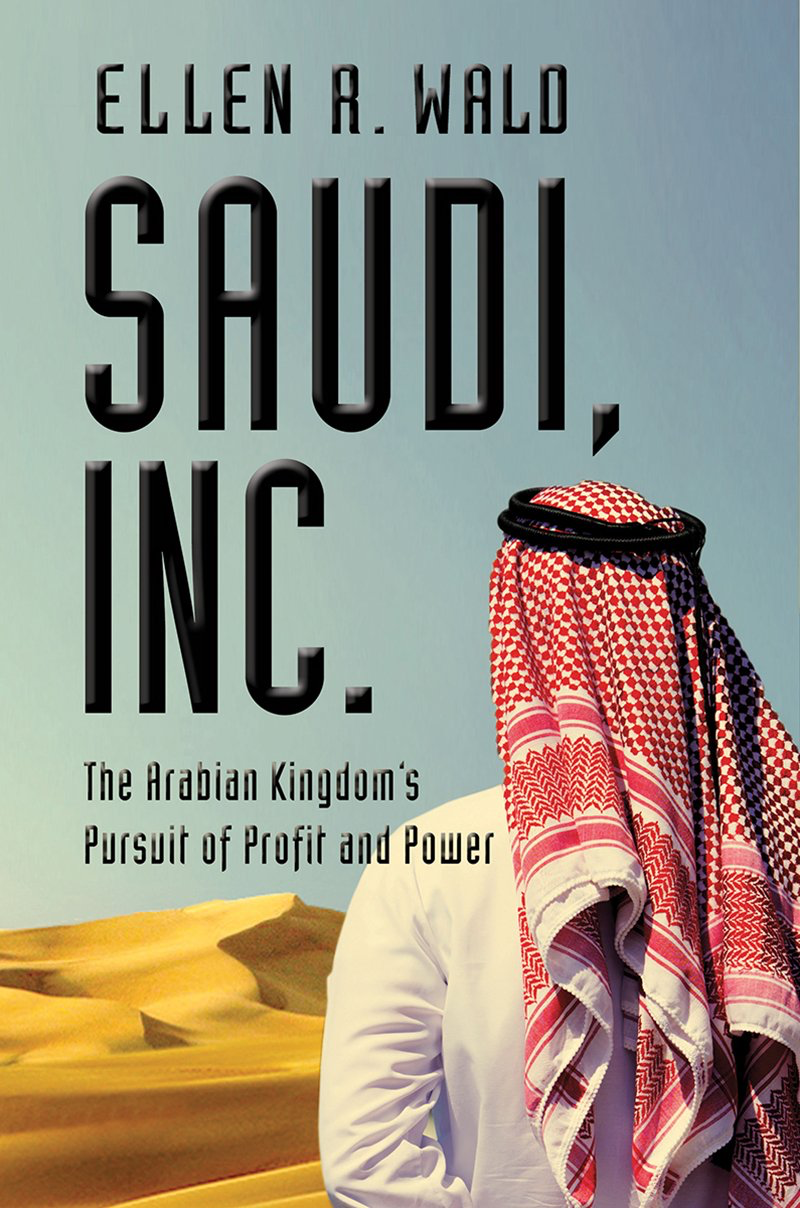 America is now an oil exporter. Saudi Arabia has been one for the better part of a century, first in partnership with Standard Oil of Southern California(now Chevron)and over time on their own. The history of Saudi Arabia is inextricably linked to the business acumen of the ruling family and their ability to make ‘God’s gift’ to the Kingdom one that they controlled and used to maintain their power. Now, on the verge of the largest IPO in history, we check in with Dr. Ellen Wald, author of ‘Saudi, Inc.: The Arabian Kingdom’s Pursuit of Profit and Power’ to determine what state of U.S.-Saudi relations have been and are today. Saudi Arabia will be in the news a lot in the coming period. With a new Crown Prince in his 30’s the world imagines a different Saudi Arabia going forward. We will put this mysterious kingdom in context for you in this podcast.
Podcast: Play in new window | Download
 Ninety miles from Florida’s southern tip lies the intriguing political story of Cuba. Long-time enemies, trying to spread Communism in our sphere of influence, once a client state of the former Soviet Union, we must consider what kind of risk or opportunity the island holds for us today. With Fidel Castro dead and Raul handing power over to a designated successor, is the new boss same as the old boss, or will the cultural and political bonds between our nations be mended? President Barack Obama began re-establishing relations in his second term, but the current Administration is less inclined to continue that process. In this podcast, we turn to Roseann Lake, a reporter for ‘The Economist’ magazine in Cuba, for her insights.
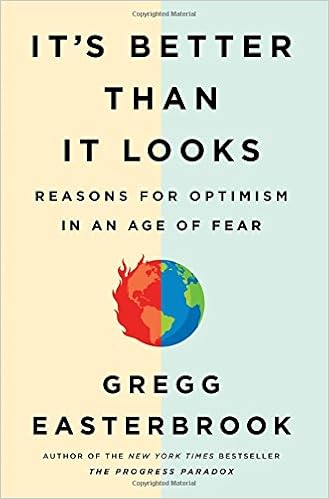 FDR reminded us of this many years ago. And, according to author Gregg Easterbrook it’s never being truer than today. So while we dwell on small details the big picture for the world is that whatever indices you use–disease, poverty, resource depletion, crime, food supply, world war–the world has never been better off. Mr. Easterbrook admits that inequality and climate change remain challenges, but, in his mind, more easily overcome against this backdrop of improving conditions around the globe. It’s an optimist’s view of the human condition and a welcome change from 24/7 misery many are selling. His thesis is ‘It’s Better Than it Looks’. Cheer up and listen.
 Astronomist, David Weintraub, completes our mini-series on current space exploits by explaining the historical fascination with the red planet and present day efforts to get there in his book ‘Life on Mars: What to Know Before You Go’. It’s all the rage and the pioneers are lining up to jump aboard the first manned spaceship going that way. Would you? Consider this: it’s a risk in going, will take about six months transit and there’s no need to buy a round trip ticket. Oh, I forgot to say, that there’s no oxygen, just carbon dioxide, so no need to bring clothes because you’ll be walking around in that spacesuit for the foreseeable future. And, if there’s no doctor on the journey, well….It’s still fascinating to contemplate as we do on this episode.
 With the term being bandied about as a weapon of mass distraction, you probably are confused by what the term ‘fake news’ really means. It’s for that reason that America Trends brings you a two-part series culled from a panel discussion which Larry Rifkin moderated in Connecticut recently. The panel included three Pulitzer Prize-winning journalists. The event was put on by Connecticut Humanities and involved Capital Community College of Hartford. Production services were provided by Middlesex Community College’s Corporate Media Center, based in Middletown, Connecticut. The panelists are McIntire of the New York Times, Gina Seay, former senior editor of the Hartford Courant, Steven G. Smith, photojournalist and professor at the University of Connecticut(U Conn) and Mike Stanton, another U Conn professor. More of their backgrounds are provided in the introductions.
 ‘What gets measured gets done’, according to management experts like Tom Peters. But does it get done at the expense of other–more important–things? That’s the central question of the book ‘The Tyranny of Metrics’ by Jerry Z. Muller. He joins us for a discussion of whether all goods and services in our society can be quantified and whether that’s the best use of precious time. For example, is the new tendency in public education to teach to the test enhancing learning or simply a way to limit the evaluation of students and teachers to a number when society may benefit from a much more robust measure of readiness. Central to the issue is whether using numbers as the predominant indicator assures that they will be manipulated in some way. Take a listen.
 Recently, when the U.S. Supreme Court declared the federal ban on sports betting unconstitutional and repealed the Professional and Amateur Sports Protection Act, it opened the floodgates for any state to legalize sports betting. On the heels of this decision, America Trends got busy in finding out what this might suggest for the future for our society. The normalizing and legalizing of any such activity has social impacts. In this blended podcast, we turn to Keith Whyte, executive director of the National Council on Problem Gambling, Arnie Wexler, co-author of ‘All Bets Are Off’ and Daniel Simone, an expert on mob activities in America, to get their unique perspectives on what happens next.