EP 721 Is a Rising Global Middle Class a Good Thing?
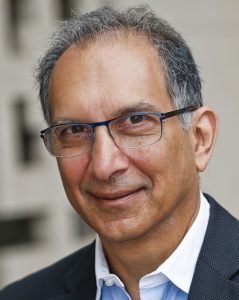 How could it be anything but? More people around the globe are being lifted out of poverty than ever before. In fact, half of the world’s population can count themselves in that number and the pace of that growth on a global scale is faster than ever in human history. As we reach the 5 billion number by 2030 one could argue that this is great news. And it is. But the outgrowth of such growth and demand for products and services are byproducts like more pollution, thus a faster acceleration of problems related to climate change, and growing competition between the mature middle class and the growing demands of the now hard charging Asian middle class. And then’s there’s the question as to whether this middle class status actually buys the happiness that many imagine. We discuss all this and more today with Homi Kharas, author of “The Rise of the Global Middle Class: How the Search for the Good Life Can Change the World.”
Podcast: Play in new window | Download
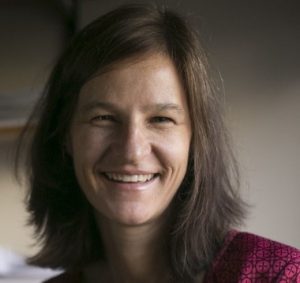 There are visionary leaders who want to create transformational change, but they may not have the skill set, strategy or fortune of good timing to affect the result they are looking for. It takes a number of factors, in combination, to take a vision and see it through to completion. We have seen lots of movements succeed, while others fall short. Recently, the gay rights movement and the fight for marriage equality, service workers and low-paid earners and the fight for 15 and now abortion rights activists clawing their way back after the reversal of Roe v. Wade by the U.S. Supreme Court, provide cases studies of different forms of organizing to win on an issue. And the revitalization of organized labor, best manifested in the UAW strike against America’s three largest automakers, is another case in point. So what are the strategies needed to prevail? In their book “Practical Radicals: Seven Strategies to Change the World, Deepak Bhargava and our guest, Stephanie Luce, provide a roadmap for success. They look at the long sweep of organizing for change and find the abolitionist movement of the 19th century as a great case study. They proceed to see how movements succeed to meet the new challenges in our day.
 Out of a growing concern for skyrocketing levels of mental health issues,violence, behavior and learning disorders in American children, an activist group, Moms Across America, commissioned testing on 21 of the country’s most popular fast food brands. All 21 were tested for the most widely used herbicide in the world, glyphosate, 230 agrochemicals, 160 heavy metals and mineral content. The top ten brands were also tested for 106 commonly used veterinary drugs and hormones, Vitamin B’s and calories. The results are, indeed, distressing as we see that there’s too much of the bad stuff in these food products and not enough of the good stuff. It’s important because Americans eat 85 million fast food meals a day and, while little known, fast food brands are suppliers of many school lunches. To discuss the findings is Zen Honeycutt, the Founding Executive Director of Moms Across America.
 Football’s violence and its impact on the brain get most of the attention these days. Even if little is done to control the impacts, there are stories detailing the interrupted, or destroyed, lives of players resulting from near head on collisions every game. Yet, every summer, like clockwork, several American boys die on football fields across the country because of poorly conceived or administered conditioning drills. Since tracking began in the 1930’s, more than 700 teenagers have died in high school football, and of those deaths they are four times more likely to die non-traumatically–during conditioning–than they are from blocking and tackling during the games themselves. These deaths are due to exertional heat stroke, exertional sicking, and bronchial asthma. In Irvin Muchnick’s new book, “Without Helmets or Shoulder Pads”, he explores this phenomenon using his impactful writing style to attempt to get people to pay more attention to the brutality of these practices. His previous books and articles have helped focus policymakers on excesses in pro wrestling, pro football, sexual abuse in youth sports and helped spur the current movement to compensate college athletes.
 The one thing we all have in common is that we have to manage money throughout our lifetimes. And yet there is so little financial literacy taught in our schools. There are certain sound principles that you will read and hear time and again. In his new book, J. Ted Oakley, the founder of Oxbow Advisors, preaches a very important one as evidenced by the title “Stay Rich With a Balanced Portfolio: The Price You Pay for Peace of Mind.” It’s a great guide to the various personality traits which compel people to make good and bad decisions. For example, when things start to go south in the market do you have a tendency, out of fear, to pull all your money out and retreat to a safe harbor? Or are you one who operates out of loyalty holding on to stocks you’ve owned for years even if they no longer perform well? We’ll discuss the calm demeanor and diversification needed to make your investments bring you gently into retirement. Even if you’ve heard some of this before, a refresher is always helpful in these uncertain times.
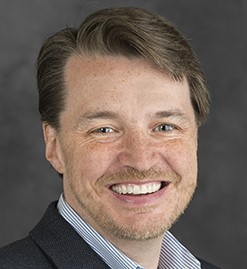 Disruption is the name of the game in so many corners of our economy including music, video entertainment, and other communications sectors, and our guest argues in this podcast that higher education is not, and cannot, be immune from it. It is too expensive, too exclusionary and a key reason for yawning gaps in income inequality. Wealthy parents, often providing legacy admissions opportunities for their children, wall themselves in to the college experience, while walling others out. The prevailing philosophy of ‘scarcity’ in higher education is outmoded when considering that great scholarship can be delivered to many excluded segments of the population through abundant digital technologies. Thus Michael D. Smith calls his compelling new book “The Abundant University.” The pandemic may or may not have offered us a good glimpse into the future. Granted it was rushed and hastily put together, but the change it signaled can be the basis to find new forms of learning which involve it exclusively, in some cases, and as a hybrid experience, both on line and in classes which require hands on instruction. Is a lecture hall with 200 students any different than learning on your computer? And don’t we all turn to you tube and other sites for instruction daily? It’s a fascinating topic and we explore it today.
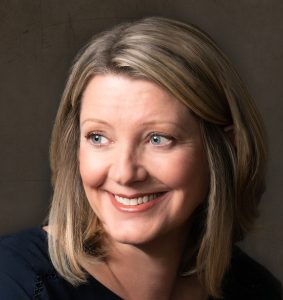 I remember a popular song back in the day whose title was “If Loving You is Wrong I Don’t Want to Be Right” and while that was about love, how is it that we in this society almost 50 years later have transferred that concept to our politics? Are we really that isolated and disconnected with other people, that we need to join a political team, on line or in our imagination, to feel a sense of belonging? What happened to church groups, fraternal organizations or softball teams? In the book “Wrong: How Media, Politics, and Identity Drive Our Appetite for Misinformation,” Dannagal Goldthwaite Young, a professor of political science and communication at the University of Delaware, tries to explain why this is happening. Her conclusion is that if being wrong allows us to comprehend the world, have control over it and connect with our community all in service to our political team, then we don’t want to be right. Like advertising honchos figured out a long time ago, those psychological needs can drive us to want a product that might not benefit us, or in this case, our country, at all. A new way of looking at our polarized America today on the podcast.
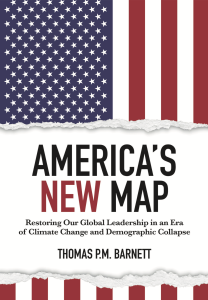 Given the impacts of climate change, aging demographics, and a growing middle class around the globe, the world finds itself at a crossroads. Superpowers, like United States, will have to demonstrate their ability to change and adapt in the coming period in order to maintain their status. As far as America goes, the process is achievable, and perhaps we are best positioned to compete and win. Given our internal political dysfunction, it will not be easy. We will have to accept a new reality of vertical re-alignment based on the effects of climate change, particularly on our Central and South American neighbors. Absorption of young people who will continue to stream across our borders, from southern climes, will be necessary. And while this does not seem feasible, given today’s politics, our guest suggests that what we today fear most may soon become an inevitability. And a welcome one, at that. Thomas P.M. Barnett is one of America’s most respected national security strategists, and he proves his alacrity at seeing the world as it is and will be in his latest book, “America’s New Map: Restoring Our Global Leadership in an Era of Climate Change and Demographic Collapse.” You will want to hear his fascinating perspectives.
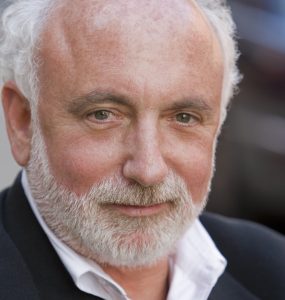 You may have thought that getting your child through those tough teenage years meant the end of your full immersion parenting, but after listening to this podcast, you may want to think again. In fact, with new brain research and a host of changes in our economy and society, your child may need you more in their 20’s and 30’s than they did in their teenage years. Laurence Steinberg, Ph.D., a professor of psychology and neuroscience at Temple University, and author of “You and Your Adult Child: How to Grow Together in Challenging Times” offers a new blueprint for our responsibility as parents going forward in our children’s lives. We may not be prepared for the dual responsibility of providing enough support while recognizing their need for autonomy as they blaze their singular path in the adult world. Issues like finances, their choice of romantic partners and later their approach to parenting require a delicate balance as you assess what help they might need and how to provide it. We’ll share ideas as he does in his book that few psychologists, heretofore, have taken on. Previously, writings in this field have focused on estrangement between parents and adult children. While he addresses that important topic, his work goes far beyond that.
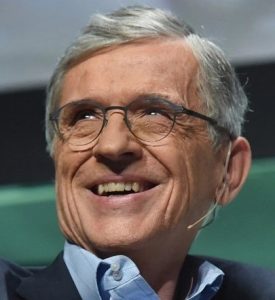 Our guest likes to compare and contrast this moment in history with the Gilded Age of the Industrial Revolution, when robber barons pillaged the economic landscape with impunity. At some point when the spoils all went to the top, when labor was exploited and the excesses became too apparent to all, the government stopped being a spectator and developed antitrust law and regulatory oversight. Rather than thwarting capitalism, these government guardrails produced better results for industry, consumers and workers. We’re at that moment again, he says, with the digital economy and that regulatory framework, while different than the one governing our industrial development, must happen soon. AI is about to turbocharge whatever your grievances are with the dominant players in the digital space–the owners creating the rules, infringements on privacy, vast accumulation of wealth for a few, and rampant disinformation. Tom Wheeler, the former Chairman of the Federal Communications Commission, makes a compelling case for the reassertion of the public interest in our new economy in his book, “Techlash: Who Makes the Rules in the Digital Gilded Age?” He writes clearly on a host of topics that fall in this space and articulates them succinctly on this podcast.